Target Species
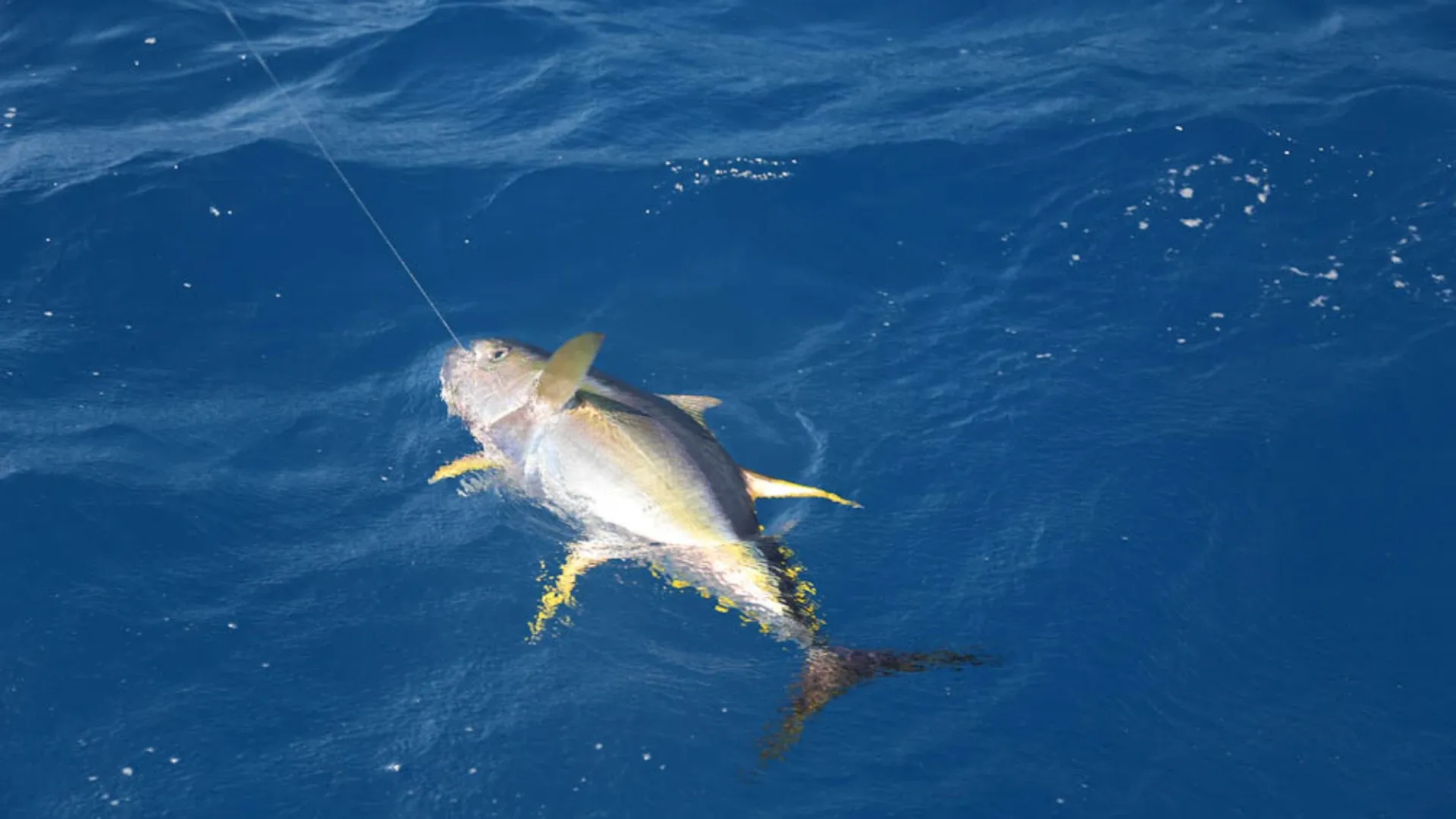
Yellowfin Tuna
The continental shelf off NSW is one of the best yellowfin tuna grounds on the east coast, offering direct access to the East Australian Current, abyssal drop-offs, and nutrient-rich canyons where trophy fish gather to feed on bait schools along the continental shelf.
Heading out wide past the coastal heads into the cobalt realm is the pinnacle of blue water angling on the east coast of Australia. For pelagic enthusiasts targeting yellowfin tuna offshore, New South Wales provides a dynamic oceanic highway where cold southern upwellings meet the warm fingers of the East Australian Current (EAC). Yellowfin tuna (Thunnus albacares) are built for speed and endurance, possessing sickle-shaped fins, high-powered lateral musculature, and an insatiable appetite. Whether you are running out past the continental shelf to cube over sea canyons or searching along satellite temperature edges for foaming schools smashing sauries on the surface, these waters deliver exhilarating sport.
Finding success out wide is not a matter of sheer luck. It requires reading the open ocean as carefully as an estuary angler reads a sandbank. You must understand how current boundaries behave, how submarine features create upwellings, and how sea surface temperature (SST) satellite data dictates tuna movements. In this detailed guide, you will learn the exact tackle configurations, boat handling tactics, bait presentation methods, and safety protocols necessary to track, hook, and boat yellowfin tuna across the offshore grounds of New South Wales.
Getting There
Yellowfin Tuna
Thunnus albacares
Always check current NSW DPI regulations before fishing. Bag and size limits may change.
Understanding the NSW Shelf: Location Intelligence
Offshore NSW features extreme underwater bathymetry where the continental shelf plunges from 200 metres into depths past 4,000 metres, creating massive upwellings that trap nutrients and concentrate yellowfin tuna along sea canyons and seamounts.
Targeting yellowfin tuna in open water demands a thorough appreciation of bathymetry, current mechanics, and temperature anomalies. Unlike reef species that hold to fixed bottom structure, yellowfin tuna roam pelagic corridors governed by oceanic currents and bait concentrations. However, their movements are directly anchored to deep seabed architecture that influences the entire water column.
The defining boundary along the New South Wales coastline is the continental shelf drop-off, traditionally marked by the 100-fathom (approx. 200-metre) depth contour. In southern zones around Bermagui and Narooma, this drop-off hugs the shoreline, sitting merely 12 to 15 nautical miles from the coast. Further north off Sydney and the Central Coast, the shelf pushes wider, sitting 20 to 28 nautical miles offshore. Beyond the shelf lie undersea canyons, massive historical landslide zones, and deep-sea pinnacles like Browns Mountain, Heatons Hill, and the Southern Canyons.
These geological features interrupt the flow of the southward-moving East Australian Current. As deep ocean currents strike the vertical walls of these canyons, nutrient-rich, cold sub-Antarctic waters are forced upwards into the photic zone. This upwelling triggers explosive phytoplankton blooms, which draw in krill, arrow squid, pilchards, and slimy mackerel. Yellowfin tuna patrol these dynamic upwelling zones, using the steep walls of the drop-offs to pin schools of baitfish against the surface.
Water temperature boundaries represent another critical element of location intelligence. Yellowfin prefer water temperatures between 18°C and 24°C, but they actively search for sharp temperature breaks where warm current eddies clash with cooler inshore waters. A sudden temperature rise of 1°C to 2°C across a narrow ribbon of sea often concentrates bait along a visible tide line marked by foam, floating kelp, and calm slicks. Working the warmer side of these temperature breaks, or following the boundary where dirty inshore green water transitions into vibrant oceanic cobalt, routinely puts lures and baits right into the strike zone of feeding tuna.
Location Essentials
NSW Continental Shelf
-33.9500, 151.6000
Navigating offshore grounds requires monitoring visual ocean clues alongside your marine electronics. Sounders must be tuned to track targets deep in the water column, scanning the top 100 metres for scattered thermoclines and bait balls. Flocks of diving Australasian gannets, fluttering shearwaters, and wheeling terns provide long-range visual markers of subsurface feeding tuna. When birds hover low and dip repeatedly along a distinct current lane, schools of yellowfin are pushing baitfish directly toward the sunlit surface.
When Is the Best Time to Fish for Yellowfin Tuna off NSW?
The best time to target Yellowfin Tuna offshore in New South Wales is during early morning sunrise and late afternoon sunset periods from May through November, especially around the turn of the tide when the current pushes baitfish against deep drop-offs.
Timing an offshore run for Yellowfin Tuna requires balancing daily light transitions, lunar cycles, and broader oceanic currents. Low-light periods at first light and dusk consistently trigger intense feeding behaviour. Surface schooling baitfish such as sauries, slimy mackerel, and pilchards get pushed toward the surface by predator packs patrolling below. The low sun angles reduce glare on your leader material and conceal hook rigs, making tuna far less boat shy. A midday lull is common when the sun sits overhead, causing fish to sound into depths between 80 and 200 metres, although hard-running temperature edges can sustain a bite right through the middle of the day. If you’d rather chase pelagics in warmer northern water, our Spanish mackerel guides cover the Whitsunday grounds.
Tidal flow plays a critical role even when fishing kilometres past the shelf edge. While surface tides are less obvious in blue water than in estuaries, the vertical movement of water columns accelerates over underwater canyons, sea mounts, and sheer terrace breaks. The two hours flanking the change of tide, whether high or low, produce the strongest current seams and upwellings. When strong offshore currents collide with rising tidal water over structural features, plankton concentrates in dense layers. This attracts bait schools and brings tuna straight up the water column. Planning your arrival at the continental shelf contours or canyon heads to coincide with a tide turn gives you the best window for explosive surface action.
Night fishing for Yellowfin Tuna is an exceptionally productive tactic along the NSW coast, particularly between June and September. Once darkness sets in, the scattering layer of oceanic squid, krill, and lanternfish migrates upward from the deep abyssal plains toward the surface. Drifting along the 200 to 1,000-metre line under a sea anchor with underwater submersible green lights brings massive bait aggregations directly behind the transom. Setting up a steady pilchard chunk trail in the dark accounts for some of the heaviest fish of the season, as large fish lose their typical daytime wariness and feed within metres of the boat hull.
Moon phases strongly dictate night feeding patterns and tidal volume. The days leading up to and immediately following a new moon are prime for chunking and live baiting, as pitch-black waters make tuna depend heavily on scent trails and lure vibrations. During a full moon, tuna often feed hard throughout the entire night on surface squid, which can make early morning trolling bites harder to come by as the fish are already gorged by daybreak.
Tide Times
Optimal Tide
Two hours before and after the tide turn over shelf drop-offs
Tide movement is critical for fish activity. Most species feed actively during tide changes, especially the run-in (incoming) tide.
Detailed hourly tide charts
Official tide predictions
7-day tide calendar
Tide Guide
Best for most species. Fish move in to feed as water rises.
Good for ambush predators. Baitfish get swept out.
Slower bite. Fish less active during slack water.
New/full moon. Bigger tidal range, more fish movement.
Moon Phase & Solunar
Moon phases influence fish feeding behavior. New and full moons create spring tides with stronger currents and increased fish activity.
Best Phases
- New Moon: Peak feeding activity, spring tides, excellent fishing
- Full Moon: Strong tides, night feeding, great for nocturnal species
- 3 Days Either Side: Extended peak period for maximum results
Major/Minor Periods
- Major Periods: Moon overhead/underfoot (2-3 hours)
- Minor Periods: Moon rise/set (1-2 hours)
- Best Times: Major period + dawn/dusk = explosive action
Weather Conditions
Check current conditions before heading out. Wind, swell, and barometric pressure significantly affect fish behavior.
Official forecasts, warnings & radar
Hourly wind speed & direction
Swell height, period & direction
Study Sea Surface Temperature Breaks Before Leaving Port
Always examine real-time Sea Surface Temperature (SST) satellite charts before slipping the lines. Target sharp breaks where water temperatures drop by 1 to 2 degrees Celsius over short distances. These thermal edges form distinct current highways where upwellings concentrate micro-nutrients and baitfish schools.
Yellowfin Tuna Seasonal Calendar
What Tackle Do You Need for Yellowfin Tuna off NSW?
Targeting offshore Yellowfin Tuna demands heavy-duty gear, centered on 24 to 37kg stand-up trolling outfits with two-speed lever drag reels, or 14000 to 20000 size heavy spin reels matched to PE 6 to 8 braided mainlines for casting topwater stickbaits.
Tackling powerful pelagics in deep oceanic water tests every connection in your system. A standard trolling outfit should consist of a 5-foot-6-inch to 6-foot heavy stand-up rod built on a composite carbon-fibreglass blank with heavy-duty roller guides or silicon carbide ring guides. This blank must combine a fast, responsive tip section that imparts lifelike swimming action to lures with massive low-down lifting power in the butt section to shift stubborn, circling tuna in deep water. Pair this rod with a 30W to 50W two-speed lever-drag game reel loaded with either 24kg or 37kg monofilament, or a backing of 80-pound hollow-core braid spliced into a 100-metre topshot of monofilament. The low gear ratio of a two-speed reel is vital when an 80kg fish locks into a death spiral directly underneath the boat.
For anglers who prefer casting stickbaits or popping at surface bust-ups, a heavy 7-foot-6-inch to 8-foot spin rod rated for PE 6 to PE 8 lines is the weapon of choice. Match this with a reliable 14000 to 20000 size high-speed spin reel boasting at least 15 to 20kg of smooth carbon drag pressure. Spool the reel with high-grade 65 to 80-pound eight-strand PE braid. The thinner diameter of modern braids provides exceptional casting distance to reach boiling fish without motoring into their danger zone, while retaining the line capacity required when a tuna peels off 250 metres of line on its initial run. For more tackle basics, see our tackle essentials guide.
Leaders and terminal hardware must be completely unyielding. For trolling skirted lures, use a 3 to 4-metre wind-on leader of 150 to 200-pound monofilament tough trace to handle the abrasive jaws of large tuna and thrashing tail kicks. When live baiting or running a cube trail, drop your leader to 80 to 100-pound clear fluorocarbon. Fluorocarbon delivers superior abrasion resistance against small teeth and remains virtually invisible in clear, cobalt-blue offshore currents. Use heavy-duty, forged, wide-gap circle hooks sized from 7/0 to 9/0 for baiting, and ensure every swivel is a genuine ball-bearing unit rated to at least 200 pounds to prevent catastrophic line twist.
Complete Tackle Specifications
| Component | Specification |
|---|---|
| Trolling Rod | 5'6" to 6'0" stand-up game rod, 24-37kg (50-80lb) rating with roller tip |
| Trolling Reel | 30W or 50W two-speed lever drag conventional reel, carbon drag system |
| Spin/Popping Rod | 7'6" to 8'0" heavy fast-action offshore rod, PE 6-8 rating |
| Spin Reel | 14000 to 20000 heavy-duty saltwater spin reel with 15-20kg drag |
| Main Line | 65-80lb PE 8-carrier braid or 24-37kg premium nylon game mono |
| Wind-On Leader | 100-150lb tough nylon monofilament, 5-7 metres in length |
| Bait Leader | 80-100lb 100% fluorocarbon leader, 2-3 metres in length |
| Terminal Hooks | 7/0 to 9/0 heavy-gauge forged offset or non-offset circle hooks |
How Do You Rig for Yellowfin Tuna?
To rig effectively for Yellowfin Tuna, construct a dedicated drifting cube or live bait rig using a spliced wind-on leader, a knotless or wind-on connection to fluorocarbon, and a snelled circle hook designed to produce clean jaw-corner hookups without line abrasion.
Rigging for offshore tuna requires clean execution, as the slightest structural flaw in your line connections will fail under extended, heavy drag loads. When drifting over the continental shelf canyons, the drifting cube rig is the most reliable system for presenting baits naturally down the water column. This rig avoids swivels, clips, or sinkers whenever possible, ensuring your bait sinks at the identical speed of your unweighted burley cubes. Check our detailed guide to fishing rigs for complementary terminal variations.
To tie this rig, the main line must first terminate in a 100 percent strength double line using a Bimini twist. Connect your mainline double to a 5-metre length of 100-pound monofilament wind-on leader via an authentic loop-to-loop connection. The monofilament acts as an essential shock absorber, cushioning violent lunges and headshakes when the tuna surges under the hull. At the terminal end of the wind-on leader, secure a 2-metre shot of 80-pound fluorocarbon using a double uni knot or a compact FG knot to maintain a slim, streamlined profile that glides effortlessly through rod guides.
The hook connection must be completely dependable. Snelled connections on heavy-gauge circle hooks produce the highest hookup percentages and prevent hook rolling during brutal vertical fights. The circle hook design turns naturally into the corner of the tuna’s jaw hinge as line pressure builds, keeping the fluorocarbon trace away from the fish’s abrasive teeth. When heavy cross-currents prevent the bait from sinking into the strike zone, slide a small barrel sinker directly onto the mainline above the knot, or wrap a strip of lead wire around the hook shank to keep the bait drifting naturally without spinning.
Building a Deep-Water Yellowfin Cubing Rig
- 1
Tie a Bimini Twist
Form a 30 to 40-turn Bimini twist in your braided mainline to create an ultra-reliable double line loop with 100 percent knot strength.
- 2
Connect the Wind-On Leader
Pass the Bimini loop through the Dacron loop of a 5-metre, 100-pound monofilament wind-on leader three times to form an interlocking cat's paw connection.
- 3
Join the Fluorocarbon Trace
Splice a 2-metre section of 80-pound fluorocarbon trace onto the end of the wind-on leader using a streamlined 4-turn Double Uni knot or an FG knot.
- 4
Snell the Circle Hook
Pass the fluorocarbon through the eye of a 7/0 or 8/0 forged circle hook from the front, wrap the shank 7 times, and pull tight through the eye to create a firm snell.
- 5
Seat and Trim the Connection
Moisten the snell thoroughly with water, pull it rock hard with rigging pliers, and trim the tag end to leave a neat 3mm safety margin.
- 6
Hide the Hook in the Bait
Insert the circle hook into the head or severed loin of a fresh pilchard cube, turning the point completely through so the barb remains exposed.
- 7
Perform a Maximum Load Test
Hook the bend onto a secure deck cleat and load the rod to its full fighting curve to verify every knot and loop before deploying your line.
What Bait Works Best for Yellowfin Tuna?
Fresh slimy mackerel and high-oil pilchards are the best baits for Yellowfin Tuna, followed closely by fresh striped tuna chunks and oceanic squid, which disperse concentrated scent trails that lure deep-holding pelagics up to the surface.
Yellowfin Tuna are opportunistic yet discerning predators that feed heavily on oily, schooling baitfish and cephalopods. Offering fresh bait with vibrant natural colour, firm flesh, and high oil content is critical to drawing fish away from surrounding wild prey. Stale, freezer-burned, or soft bait falls apart under current resistance and will regularly be ignored by discriminating fish. Review our complete bait guide for expert handling and storage procedures.
Slimy mackerel (blue mackerel) represent the gold standard for live baiting and dead drifting around offshore current breaks. A lively, kicking mackerel bridled through the nose with a rubber band onto a 8/0 circle hook sends out intense lateral-line distress pulses that cruising tuna home in on from hundreds of metres away. If live bait is difficult to source on offshore bait reefs before steaming out, fresh dead slimeys rigged with a chin weight to swim cleanly behind an outrigger remain lethal on the troll. Live slimies are also the first-choice bait for big kingfish on the reef lines, as our Gold Coast offshore kingfish guide explains.
Pilchards are the absolute backbone of offshore chunking and cubing operations along the NSW coastline. High in natural oils, pilchards release an intense scent slick that drifts downstream with the current, creating an unbroken feeding lane that pulls schools upward from the depths. Chopping pilchards into clean, thumb-sized cubes ensures a slow, steady drift rate. For the hook bait, select the firmest pilchard in the block, burying the hook entirely inside the meat with only the point protruding to match the unweighted chunks tumbling through the burley line.
Fresh striped tuna (skipjack) caught early in the session provides premium chunking material. Striped tuna flesh is rich in dark, oxygenated blood and aromatic oils, making it vastly superior to frozen alternatives. Cutting the belly flaps and thick side loins into tapered strips creates durable baits that flutter naturally in the current and withstand pecks from nuisance muttonbirds or small surface peckers. Fresh arrow squid and broadbill squid are similarly devastating, particularly during evening or overcast daytime drifts when their luminous mantles match the bait naturally surfacing from canyon depths.
Bait Performance Analysis
| Slimy Mackerel | Pilchards | Fresh Striped Tuna | Oceanic Squid | |
|---|---|---|---|---|
| Effectiveness Rating | Exceptional | Exceptional | High | Very High |
| Durability on Hook | Very High | Moderate | High | Exceptional |
| Scent Dispersion | High | Maximum | Maximum | Moderate |
| Availability | Common over inshore reefs | Readily available frozen | Caught on grounds via micro-jigs | Bait shops or jigged at night |
| Best Use Conditions | Live baiting under balloons or slow trolling | Drift cubing and establishing continuous burley trails | Deep chunking during slow drifts along canyon walls | Night drifts and deep slow-trolling near shelf edges |
Match Your Hook Bait to the Burley Drift Rate
When chunking with pilchards, ensure your baited line leaves the reel spool completely freely with open bail or free spool clicker. If line tension drags the bait, it will suspend and look unnatural compared to the loose burley cubes sinking alongside it, causing wary Yellowfin to turn away at the last second.
How Do You Catch Yellowfin Tuna off NSW?
To catch Yellowfin Tuna offshore, locate active feeding schools or temperature breaks on the continental shelf, establish a steady berley trail with pilchard cubes or troll a spread of skirted lures at seven to eight knots, and present unweighted drifted baits or cast stickbaits directly into the feeding zone.
Working offshore waters for yellowfin demands adaptability because fish behaviour shifts rapidly depending on sea conditions, water temperature, and available forage. Trolling serves as your primary search pattern across vast blue water. Run a five-lure pattern consisting of two diving minnows in close on the short and long corners, two skirted pusher lures out on the riggers, and a small bird-and-feather combo way back in the shotgun position. Set your cruising speed between six and eight knots, adjusting throttle until your skirted lures swim with a clean cycle of popping to the surface, breathing air, and diving while trailing a dense bubble smoke trail. Keep an eye out for bird bust-ups, current convergences, and sudden water changes on your surface temperature gauge.
                    TYPICAL 5-LURE TROLLING SPREAD

                              [ Transom ]
                              /         \
                 Short Corner             Long Corner
               (Deep Diver 15m)         (Skirted Pusher 25m)
                     /                           \
           Short Rigger                         Long Rigger
        (Medium Slant 40m)                   (Bullet Head 55m)
                     \                           /
                      \                         /
                                Shotgun
                       (Bird + Feather Jig 80m)
When trolling across productive grounds, watch your sounder closely for deep bait balls holding between forty and eighty metres. If you see arches hugging the bait, pull the throttles back to neutral, drop heavy knife jigs straight down through the water column, and work them back with aggressive, rhythmic mechanical jigging. If you encounter tuna actively smashing sauries or redbait on the surface, approach the school from upwind with the motor revs kept low and steady. Avoid charging headlong into the boil, as boat noise quickly drives feeding fish down. Cut the engines thirty to forty metres off, cast a floating or slow-sinking stickbait across the outer perimeter of the school, and work it back with sharp sweeping pulls of the rod tip punctuated by brief pauses.
For drifting and chunking, anchor or drift along a thirty to fifty fathom drop-off or canyon wall. Cut fresh pilchards into thumb-sized chunks and toss one piece into the current every ten to fifteen seconds to build an unbroken trail. Strip line off your reel by hand, matching the drift speed of your bait to the free-falling pilchard pieces. Yellowfin possess exceptional eyesight and will refuse any bait that pulls unnaturally against line drag. For live baits, pin a lively slimy mackerel through the bridle or nostrils, set it out under a balloon twenty to thirty metres back, and set another bait deep down with a breakaway sinker attached to the main line by an elastic band.
Bite Detection and Hookset
Detecting a strike varies dramatically between trolling, cubing, and topwater casting. On the troll, tuna hit with explosive speed. Your reel will scream against the preset strike drag, often stripping fifty metres of line in three seconds before the crew even clears the deck. Under no circumstances should you immediately grab the rod out of the holder and jerk back. Leave the rod in the gunwale rod holder, maintain forward vessel momentum for another five to ten seconds to drive the hook point home and encourage trailing fish in the school to grab secondary lures, then bring the boat to an idle and remove the outfit.
When cubing or drifting live baits with circle hooks, the take usually begins as line peeling rapidly off an open bail or light clicker drag. Yellowfin will pick up a drifting bait and swim straight down with the school. Resist every natural urge to drop the rod tip and strike hard. Pulling back forcefully will rip a circle hook out of the fish’s throat before it finds purchase. Instead, allow the fish to take line for three to five seconds, smoothly engage the reel lever to the strike position or close the bail arm, point the rod tip directly down the line, and wind steadily into the fish. As the line tightens against the drag, the circle hook rotates cleanly around the jaw hinge, finding a rock-solid hold in the corner of the mouth without foul hooking the gut.
Topwater strikes on stickbaits and poppers provide heart-stopping visual takes. When a tuna boils over your lure, continue sweeping the rod and cranking the reel until you feel the heavy dead weight of the fish load onto the blank. Setting the hooks prematurely on the splash will simply snatch the lure out of the water before the fish has securely clamped down on the trebles.
Fighting and Landing Offshore Tuna
Once hooked, an offshore yellowfin settles into a distinct fighting style defined by an initial line-melting run, followed by stubborn, circling deep-water combat. After the first run ceases, lock yourself into a stand-up gimbal belt and harness. Maintain constant, unbroken pressure on the line. Tuna have rigid, bone-hard mouths, and any momentary slack line allows the hook to dislodge or permits the fish to turn its head down to initiate another long dive.
The fight runs in four stages:
- Solid take: the fish runs 50 to 100 m. Hold a steady rod angle and let the drag work.
- The stand-off: the fish sounds deep. Lock into the gimbal belt and use short pumps.
- The pinwheel: the fish circles below the boat. Lift on the up-stroke, wind on the down-stroke.
- Final approach: boat-side handling. Trace the leader with gloved hands and gaff behind the gills.
Work the fish using short, rhythmic pumps: lift the rod tip smoothly ten to fifteen degrees through the mid-section, then drop the tip back down quickly while gathering line onto the spool. Avoid frantic, exaggerated rod swinging, which strains your lower back and risks loading the rod blank past its elastic recovery limit. If the tuna dives directly beneath the hull, use the boat’s engines to motor away slowly, changing the line angle to lead the fish back toward the surface rather than attempting to dead-lift forty kilograms straight up through the current.
When the yellowfin approaches the surface, it typically enters a classic pinwheel, tracing wide upward circles beneath the boat. Anticipate the circle: as the fish turns away from the hull, hold steady and let the drag absorb the strain; as the tuna turns back toward the boat, reel hard to gain line before it swings out again. Have your gaff man standing ready with heavy rigging gloves and a sharp, barbless flying or fixed-handle gaff. Take wraps of the heavy wind-on leader using hand-over-hand glove holds, never wrapping line around your bare palms. Guide the fish alongside the hull in an uninterrupted forward glide, reaching the gaff over the fish’s back and planting the point cleanly behind the gill plate into the shoulder flesh. Lift the tuna over the gunwale in one fluid motion, dropping it directly into a clean deck area or kill box to bleed immediately.
What Are the Rules for Yellowfin Tuna Fishing in NSW?
In New South Wales, yellowfin share a combined bag limit with albacore, bigeye and longtail tuna: five fish in total, of which only two may be ninety centimetres or longer. There is no minimum legal length.
Offshore anglers targeting yellowfin along the New South Wales coastline must hold a valid NSW Recreational Fishing Licence before departing port. The New South Wales Department of Primary Industries manages yellowfin tuna under a combined limit with albacore, bigeye and longtail tuna. You can keep five of these tuna in total per day, and no more than two of them can be ninety centimetres or longer. Southern bluefin tuna sit outside this group with their own bag limit of one. While there is no legal minimum size requiring the release of tiny specimens, responsible game fishers avoid retaining juveniles to safeguard future breeding stocks. Fishing regulations change over time; always confirm the latest updates directly on the state fisheries regulations portal before heading to the boat ramp.
Critical Offshore Safety Considerations
Venturing past the continental shelf involves extreme marine risks that demand rigorous preparation:
- Ocean Bar Hazards: Coastal river bars at Bermagui, Batemans Bay, and Narooma present severe breaking waves during run-out tides and southerly groundswells. Never cross on an outgoing tide without assessing sea state from the breakwall.
- Weather and Distance: Offshore canyons lie twenty to forty nautical miles out to sea. Southerly busters can produce gale-force winds and three-metre wind waves within forty-five minutes. Always monitor Marine VHF channel 16, log on with Marine Rescue via app or radio, and turn back early if conditions deteriorate.
- Mandatory Gear: Vessels travelling more than two nautical miles offshore must carry an EPIRB (406 MHz), offshore flare kit, waterproof floating torch, bucket with lanyard, VHF radio, lifejackets for all aboard, and sufficient backup fuel (calculate one-third out, one-third back, one-third reserve).
- Emergency Contact: In an offshore emergency, contact Marine Rescue NSW via VHF Channel 16 or call Triple Zero (000) if within mobile range.
Responsible pelagic angling hinges on proper handling and conservation ethics. Practice selective harvest by taking only what you and your family can eat fresh, releasing surplus tuna using barbless hooks and minimal out-of-water handling. If you intend to harvest a yellowfin, dispatch the fish instantly using the iki-jime brain spike method behind the crown of the head. Immediately sever the pectoral artery behind each gill plate to bleed the meat thoroughly, and place the carcass into an insulated fish box filled with a chilled saltwater slurry. Tuna flesh spoils rapidly at ambient ocean temperatures, and proper handling ensures exceptional culinary quality on the table.
- Dispatch all retained tuna quickly with an iki-jime spike to prevent lactic acid build-up in the muscle.
- Bleed fish thoroughly by slashing the throat latch or inserting a small cut behind the pectoral fin.
- Submerge the catch entirely in an ice slurry made from three parts ice to one part seawater.
- Use non-offset circle hooks when drifting or cubing baits to minimise internal hookings and ensure safe release of undersized fish.
- Keep a long dehooker or tag pole ready at the gunwale to release fish alongside the vessel without removing them from the water.
- Review complete vessel safety requirements in our fishing safety overview before planning long-range runs.
Your Questions About Yellowfin Tuna Fishing off NSW
What is the best time to fish for yellowfin tuna off NSW?
The best time to fish for Yellowfin Tuna offshore is between May and November, with early morning dawn bite windows and late afternoon sunset sessions producing the most consistent surface activity.
Peak fishing hours generally occur at the change of first light, when rising sun rays illuminate deep bait schools, pushing squid and mackerel toward the surface. Tidal changes along the shelf break create localized upwellings that bring feeding tuna into surface range. Winter and early spring consistently produce the heaviest fish along the southern NSW coast, while late autumn marks the arrival of massive schools following the northern edge of the temperate currents.
Is offshore tuna fishing suitable for beginners?
Offshore tuna fishing is not suitable for novice anglers operating their own boats, but beginners can successfully experience the sport by booking an experienced charter operation.
Navigating thirty nautical miles offshore requires advanced seamanship, complex weather interpretation, and heavy-duty gear handling that can overwhelm inexperienced boaters. For those seeking easy fishing spots without vessel ownership, jumping aboard an accredited charter out of ports like Sydney, Bermagui, or Ulladulla offers a safe, beginner-friendly route to landing powerful ocean gamefish under professional supervision.
Do I need a boat to catch yellowfin tuna off NSW?
Yes, you need a substantial ocean-going boat or a charter booking, as Yellowfin Tuna are true pelagic species found out wide past the continental shelf.
Shore fishing and land-based fishing opportunities for true yellowfin tuna are practically non-existent along mainland Australia, unlike species such as longtail tuna that cruise close to rocky headlands. Yellowfin inhabit deep oceanic trenches, submarine canyons, and offshore current breaks starting anywhere from ten to forty nautical miles out from the coastline, requiring seaworthy vessels with twin-engine redundancy or extended fuel reserves.
Where are the best offshore spots for yellowfin in NSW?
The most productive offshore spots include the shelf drop-off between one hundred and two hundred fathoms, the Bermagui Canyons, Sydney Heads offshore drops, and underwater sea mounts.
Hot spots for yellowfin centre around abrupt bathymetric structure where undersea topography forces nutrient-rich deep currents upward. Canyons cut into the continental shelf edge, such as the Browns Mountain trench off Sydney or the Tuross Canyon on the Far South Coast, are famous fishing marks that trap immense aggregations of krill, squid, and baitfish.
What size Yellowfin Tuna can I expect?
Offshore anglers typically land Yellowfin Tuna ranging from ten to thirty kilograms, with barrel-class trophy fish exceeding sixty to eighty kilograms taken each winter.
School-sized fish between ten and twenty kilograms make up the bulk of autumn catches, offering outstanding light-tackle sport on spin gear. The average catch size increases dramatically through mid-winter, when massive solo fish and smaller packs of true trophy fish patrol the outer canyons, pushing personal bests well past the magic eighty-kilogram mark.
Is there parking at the boat ramps for an offshore run?
Trailer boat parking is available at major coastal launch facilities, including Rose Bay, Botany Bay ramps, and South Coast boat ramps with dedicated car-and-trailer bays.
Access to offshore waters begins at mainland launch ramps featuring wide multilane concrete ramps and extended vehicle-trailer bays. During peak tuna runs in mid-year, these parking areas fill well before dawn, so plan to arrive forty-five minutes before first light to secure parking and complete rigging checks before boat ramp queues build up.
Can you fish for yellowfin tuna at night offshore?
Yes, overnight drifting and chunking out wide is highly effective for Yellowfin Tuna, particularly around moonlit periods when fish feed heavily on deep squid.
Night fishing tips for pelagics revolve around drift-cubing with glow lights and luminous beads set close to pilchard or squid baits. Squid rise through the water column after dark, drawing yellowfin up from deep daytime holding depths. Ensure complete vessel deck lighting, offshore radar operation, and clear watch rotas to manage fatigue safely during dark-hours operations.
Where can I buy bait for an offshore tuna trip?
Quality bait can be purchased from regional coastal tackle stores and commercial fish co-ops situated alongside major harbours and boat ramps.
Local bait shops and harbour fish co-ops supply bulk frozen pilchards in ten-kilogram blocks, fresh local squid, and frozen sauries suited for offshore spreads. However, securing live bait like slimy mackerel or yellowtail scad using bait jigs around harbour headlands and coastal navigation buoys before heading out wide will always outperform frozen supplies.
What are the current bag and size limits?
In NSW, you can keep five tuna in total per person per day across yellowfin, albacore, bigeye and longtail, and only two of those can be ninety centimetres or longer.
These limits apply across the shared category covering yellowfin, bigeye, albacore and longtail tuna. Southern bluefin have a separate limit of one fish. Keep in mind that fisheries regulations can change periodically, so checking boat-possession tallies across multiple anglers is essential to remain compliant with state fisheries guidelines while on the water.
Is offshore tuna fishing family-friendly?
Offshore game fishing is generally not family-friendly for young children due to extended travel times, rough sea conditions, and strenuous physical demands.
Safe fishing spots for kids are best found within protected bays, estuaries, and sheltered harbours. Long runs twenty miles out to sea feature open ocean swells, rolling decks, and full-sun exposure, which can cause severe seasickness and distress in younger family members. Teenagers with sea legs, however, can handle the fast-paced action of high-speed trolling.
What should I bring for a fishing session?
Bring two heavy trolling or jigging outfits, fluorocarbon leader, a box of circle hooks, insulated kill bag, bulk ice, sun protection, safety gear, and plenty of drinking water.
An offshore fishing checklist must cover both tackle and survival essentials. Pack a pair of split-ring pliers, rigging floss, gloved fish-handling gloves, seasickness tablets, polarised sunglasses, warm windproof layers for early mornings, and double the water rations you expect to consume over a ten-hour pelagic voyage.
How crowded do the offshore grounds get?
While the open sea is vast, renowned hot spots like Browns Mountain or Bermagui Canyons can see dozens of boats concentrated in small zones on calm weekends.
To locate quiet fishing times, plan your sessions for mid-week weather windows rather than weekend calm spells. If a specific seamount is crowded with trolling spreads, running five nautical miles along the shelf edge to adjacent depth contours often reveals unpressured feeding schools holding away from the fleet.
Latest Fishing Reports
Stay updated with the latest catches, conditions, and hot tips from NSW Continental Shelf. Check these sources for recent reports filtered by location and species.
Fishraider
Community fishing reports and catch logs
Fishing World
Professional fishing reports and news
Tackle World
Local tackle shop reports and tips
NSW DPI
Official recreational fishing reports
Fishingmonthly
Monthly fishing magazine and reports
Hooked Up
Video fishing reports and tips
Pro Tip: Filter Reports
When browsing reports, search for "NSW Continental Shelf" or nearby landmarks. Look for reports from the last 7-14 days for the most relevant information. Pay attention to tide times, weather conditions, and successful techniques mentioned.
Share Your Catch
Caught something at NSW Continental Shelf? Share your success with the community! Upload your catch photos and reports to help other anglers.
Fishing regulations, bag limits, and marine park zones are subject to change by state authorities. Always verify current rules with the NSW Department of Primary Industries before setting out on the water. Check complete gear overviews in our tackle basics resource, explore nearby fishing spots along the coast, review our species guides for alternative targets, and refresh on fishing safety protocols before leaving port.
Quick Info
- Location
- NSW Continental Shelf
- Coordinates
- -33.9500, 151.6000
- Difficulty
- advanced
- Target Species
- Yellowfin Tuna
Conditions
Check local weather and tide conditions before heading out.