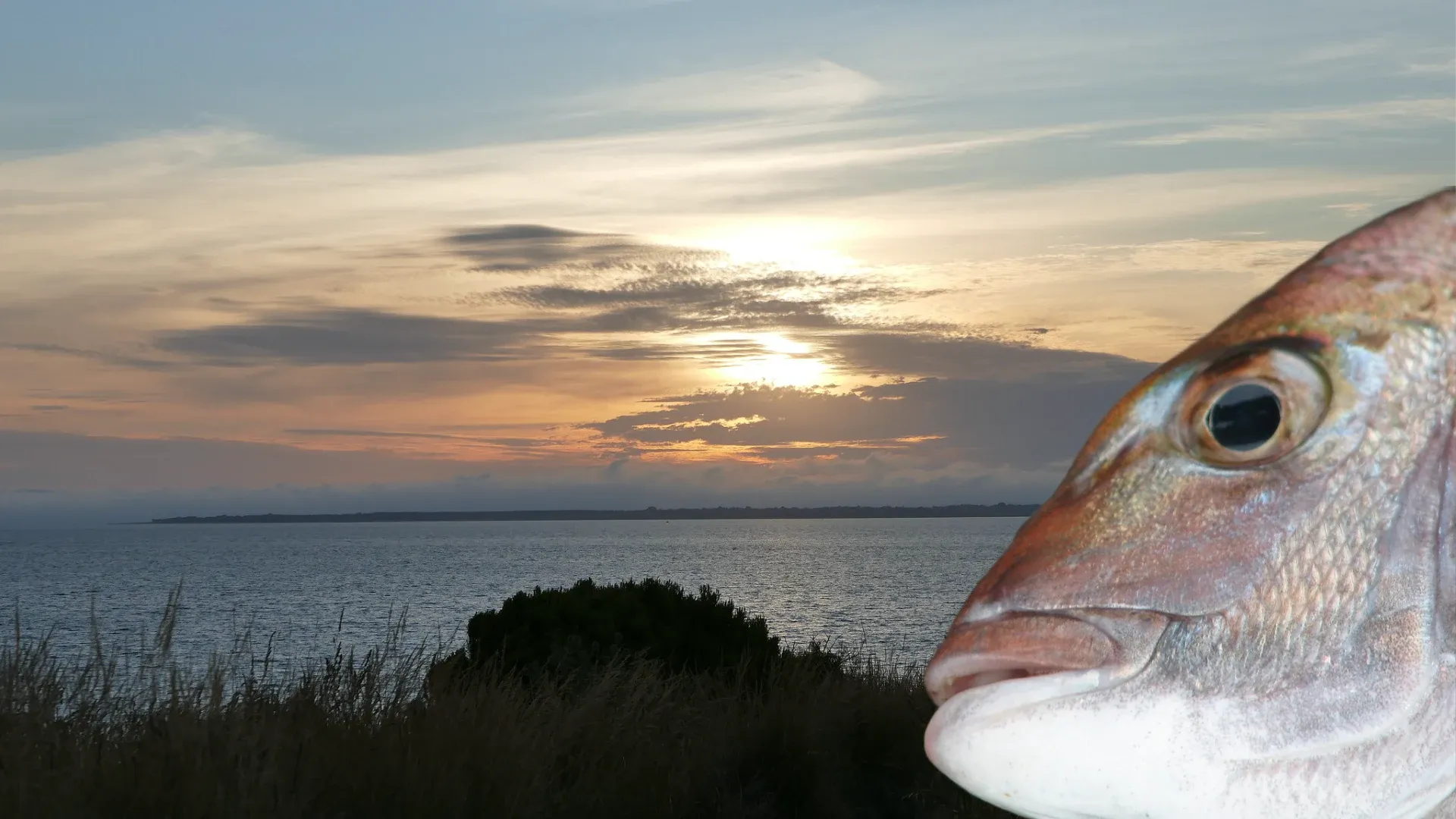
Target Species
Snapper
Western Port is one of the best spots for Pink Snapper fishing in VIC, offering deep tidal channels and extensive mudflats that produce some of the state’s biggest snapper every spring. Strong tidal flushes push nutrient-rich water through dynamic channel networks, creating prime feeding lanes for migrating schools of mature reds.
Few waterways along Victoria’s coastline generate as much anticipation among serious saltwater anglers as Western Port. While neighbouring Port Phillip Bay often gets attention for its vast open waters and school fish, Western Port holds a distinct reputation for producing bigger, thicker, and harder-fighting reds. The unique environment here demands respect. Fast-moving tides rip past mangrove-lined inlets and carve out deep gutters alongside massive, shallow mudbanks, demanding dedicated boat handling, specialised tackle setups, and pinpoint tidal planning.
When spring arrives and water temperatures begin climbing through 14 degrees Celsius, adult snapper enter the bay through the Western Entrance between Flinders and Phillip Island. They push deep into the system, heading straight for the warmth of the northern mudflats and the rich feeding corridors of the North and East Arms. Anglers targeting pink snapper fishing Western Port waters quickly discover that success is rarely an accident. It requires reading the bottom structure on your sounder, calculating your tidal windows down to the minute, and anchoring with intent.
Whether you are targeting early-season knobbies along the mud edges of Bouchier Channel or working the deeper rubbly ground around the Corals, this extensive waterway rewards anglers who master its fierce currents. In this guide, you will learn the exact marks, tidal phases, heavy tackle configurations, bait presentations, and seasonal movements needed to consistently put trophy Western Port snapper in the net. If you are brand new to saltwater setups, take a moment to review our fishing basics guide before tackling these demanding waters.
Getting There
Pink Snapper
Chrysophrys auratus
Always check current NSW DPI regulations before fishing. Bag and size limits may change.
Understanding Western Port: Location Intelligence
Western Port functions as an intricate, tide-driven drowned river valley where deep, fast-flowing channels intersect vast, shallow mudflats and mangrove systems. These distinct geographic contours generate powerful tidal currents that carry crabs, mantis shrimp, and baitfish directly into the path of hunting snapper schools holding along underwater drop-offs.
To fish Western Port effectively, you must understand its hydrology. Unlike an open, bowl-shaped bay, Western Port wraps around French Island and Phillip Island, dividing into two major tidal arteries: the Western Entrance and the Eastern Entrance. The Western Entrance accounts for the vast majority of water exchange, driving heavy tidal flow up through the North Arm past Hastings, Stony Point, and Crib Point, before winding through shallow, interconnected channels like Boultons, Bouchier, and Lyalls in the northern reaches. The Eastern Entrance channels water around San Remo and up into the Corinella Basin.
Pink snapper congregate in Western Port because of this immense food engine. As the tide floods over extensive mangrove flats and shallow banks, marine worms, crabs, and ghost shrimp become active. When the water begins to ebb, that biomass flushes off the flats into the adjacent gutters. Snapper do not usually sit out in the strongest mid-channel currents where they must expend high energy. Instead, they patrol the channel edges, rubbly humps, and current breaks between 8 and 22 metres. Sounding along these drop-offs reveals fish holding tight to bottom transitions where mud meets gravel or broken shell grit.
Early in the season, during September and October, the northern mudflats around Joes Island, Browns Reserve, and the Corinella shallows warm up much faster under the spring sun than the deeper ocean water entering the heads. Snapper move directly onto these shallow shelves, often feeding in just 3 to 6 metres of water during the top of the flood tide. As summer takes hold and overall bay temperatures rise, larger schools push into deeper channel territory around the Corals, Lysaghts, and the deep gutters of the North Arm.
Navigating Western Port demands careful attention to bathymetry. Underwater structure varies wildly, from steep clay channel banks to the hard ground off Tortoise Head and the Corals. Identifying these hard-bottom contours on your marine sounder is critical, as snapper actively browse across these gravel patches searching for benthic invertebrates and baitfish. For deeper insight into how bottom contours shape fish movements, explore our detailed guide on reading water.
Location Essentials
Western Port
-38.3600, 145.2400
The bottom composition also dictates how you run your boat. Mud and silt dominate the northern sections, demanding solid anchor holding power with Danforth or plough anchors matched to heavy chain. Further south around Tortoise Head, Cowes, and the Corals, hard calcified reefs, broken rubble, and heavy weed lines create foul ground where tackle can easily snag if allowed to drift without enough weight. Understanding where you sit along this ecological gradient determines whether you are fishing a fast-taper mud edge or a rocky ridge, both of which require distinct terminal tackle presentations.
Where Should You Stay Near Western Port?
BIG4 Ingenia Holidays Phillip Island is a couple of minutes’ drive from the Newhaven boat ramp, your launch point for the East Arm and the run up to Corinella. Stay 4 nights and save 20%.
When Is the Best Time to Fish for Pink Snapper at Western Port?
The best time to target Pink Snapper at Western Port is during the dawn and dusk periods when tide changes coincide with high barometric pressure above 1020 hPa. The peak fishing season runs from October through March, with prime migration runs kicking off as water temperatures hit 14 to 15 degrees Celsius in early spring.
Western Port is governed by severe tidal fluctuations that dictate fish behaviour far more aggressively than nearby Port Phillip Bay. Spring tides in the upper port rise and fall close to three metres, and the water moving through the North Arm and Western Entrance runs hard enough to sweep a light sinker off the bottom. Adult snapper use these currents as feeding highways, but they will not waste energy chasing bait in the absolute teeth of the run. Your prime bite window sits neatly within ninety minutes on either side of the slack-water period, especially when the change of tide aligns with low-light transitions.
Dawn and dusk trigger instinctual feeding aggression in snapper. As ambient light softens, big reds feel confident moving out of deep wash-outs and channel beds to forage across the adjacent mudflats and shallow rubble grounds. Night fishing can be just as productive, particularly during the middle of the week when boat traffic drops off. Under the cover of dark, fish lose their customary wariness and will readily swallow larger fresh baits in water as shallow as four metres. When a nocturnal high tide peaks around midnight, spots like Bouchier Channel, Corinella, and the shallow mud patches around Joes Island can turn on frantic action.
Tidal stage plays a decisive role across the diverse sectors of the port. During the early spring run through October and November, target the upper reaches of the port on the making flood tide. Shallow mud banks in the top end soak up the spring sun during low tide. As the water floods across these mudflats, it warms slightly, drawing spawning-run fish into areas such as Lysaghts, Tooradin Channel, and Boultons Channel. Conversely, on an outgoing ebb tide, drop back into the edges of the main channels where fish wait in ambush for crabs, mantis shrimps, and baitfish flushed off the flats. Mulloway at the Warmies on the Yarra and in the Barwon River peak from October too, which makes spring the busiest stretch of the year for Melbourne saltwater anglers.
Barometric pressure exerts an undeniable influence on Western Port snapper. A steady or rising barometer between 1020 hPa and 1030 hPa consistently delivers active feeding sessions. When a late-spring anticyclone settles over Victoria, bringing calm winds and high pressure, the snapper bite with confidence. A plummeting barometer associated with a hard south-westerly front will shut the bite down rapidly, forcing schools to hug the bottom mud and refuse big offerings.
Pink Snapper Seasonal Calendar
Tide Times
Optimal Tide
First and last 90 minutes of the tide change, especially incoming flood tide
Tide movement is critical for fish activity. Most species feed actively during tide changes, especially the run-in (incoming) tide.
Detailed hourly tide charts
Official tide predictions
7-day tide calendar
Tide Guide
Best for most species. Fish move in to feed as water rises.
Good for ambush predators. Baitfish get swept out.
Slower bite. Fish less active during slack water.
New/full moon. Bigger tidal range, more fish movement.
Moon Phase & Solunar
Moon phases influence fish feeding behavior. New and full moons create spring tides with stronger currents and increased fish activity.
Best Phases
- New Moon: Peak feeding activity, spring tides, excellent fishing
- Full Moon: Strong tides, night feeding, great for nocturnal species
- 3 Days Either Side: Extended peak period for maximum results
Major/Minor Periods
- Major Periods: Moon overhead/underfoot (2-3 hours)
- Minor Periods: Moon rise/set (1-2 hours)
- Best Times: Major period + dawn/dusk = explosive action
Weather Conditions
Check current conditions before heading out. Wind, swell, and barometric pressure significantly affect fish behavior.
Official forecasts, warnings & radar
Hourly wind speed & direction
Swell height, period & direction
Master the Slack Water Window
Do not pack up when the tide stops running. Many Western Port anglers wrongly believe the fish switch off at dead slack water. In reality, the 45-minute window right on the turn is when big snapper can cruise without fighting torrential flow. Drop a lightly weighted squid head right under the boat during this slack window for your best chance at a double-figure trophy.
What Tackle Do You Need for Pink Snapper at Western Port?
To fish for Pink Snapper in Western Port, you need a 7-foot to 7-foot-6-inch, 7 to 15 kilogram rod with a flexible tip to absorb heavy current, paired with a 6000 to 10000 size spin reel or baitrunner. Spool up with 30 to 50-pound braid and finish with 40 to 80-pound monofilament or fluorocarbon leader to survive abrasive reef and sharp shell grit.
Tackle requirements in Western Port differ markedly from the light-line tactics common in calmer bays. The heavy tidal flows demand specialised gear capable of holding significant lead without pulling baits out of position or bending your rod in half before a fish even touches the bait. If you bring a stiff, heavy broomstick rod, the constant wave slap and current push will skip your sinker across the bottom, scaring wary snapper. You need a rod with a supple, parabolic tip that cushions the bounce of an 8-to-16-ounce sinker while retaining brute stopping power in the mid-to-butt section to turn a rampaging red away from oyster-encrusted channel ledges.
For reels, high line capacity and a flawless, smooth drag are mandatory. When a seven-kilogram snapper picks up your bait and uses five knots of outgoing current to charge down a channel, cheap drags will jerk and pop leaders. High-end saltwater spin reels in the 6000 to 10000 range or dedicated baitrunner style reels excel here. Baitrunners let a snapper pick up the bait and run without sensing rod-tip pressure, which is critical when using twin-hook rigs with whole squid or silver whiting. For a broader overview of balanced outfits, see our tackle essentials guide.
Your choice of mainline directly dictates how much lead you must use. Thick monofilament catches substantial water resistance, requiring massive weights to reach bottom. A thin, smooth 30-to-50-pound braided line cuts through the roaring Western Port tide like a knife, reducing the required sinker weight by half. Always tie a five-metre mono shock leader (around 30-to-40-pound test) between your braid and terminal rig. This shock leader provides abrasion resistance against hull rub and floating weed, while absorbing sudden lunges when a knobby head-shakes beneath the boat. For land-based anglers, review our fishing basics guide to ensure your setup suits casting from local piers.
Western Port Snapper Tackle Setup
| Component | Specification |
|---|---|
| Boat Rod | 7ft to 7ft 6in, 7-15kg rating, fast action with a soft, absorbent tip |
| Pier / Land-based Rod | 10ft to 12ft surf rod, 8-15kg rating for distance casting |
| Spin Reel | 6000 to 10000 saltwater spin reel with at least 10kg drag |
| Baitrunner Reel | 6000 to 8000 dual-drag baitrunner reel for zero-resistance takes |
| Main Line | 30lb to 50lb quality 8-carrier PE braid |
| Shock Leader | 30lb to 40lb nylon monofilament, 5-metre length |
| Bite Leader | 40lb to 80lb tough fluorocarbon or hard-coated monofilament |
| Hooks | 4/0 to 6/0 suicide hooks snelled in tandem, or 5/0 to 7/0 circle hooks |
| Terminal Sinker | 4oz to 16oz bomb, snapper, or reef sinkers depending on tidal current |
How Do You Rig for Pink Snapper?
The most effective rig for Pink Snapper at Western Port is the twin-hook running sinker rig, constructed with a free-sliding sinker clip running along the shock leader above a heavy barrel swivel, attached to an 80-centimetre 60-pound fluorocarbon trace with two snelled 5/0 hooks.
Navigating Western Port’s currents requires rig designs that present baits naturally while anchoring firmly to the sea floor. The running sinker rig is the gold standard across most channel edges. By placing an Ezi-rig sliding clip onto your shock leader, the sinker sits securely on the substrate while your leader streams downstream in the current. When a snapper picks up the bait, line slips effortlessly through the clip without the fish feeling the dead weight of a ten-ounce lead. Keep your leader length around 70 to 90 centimetres. Leaders longer than one metre tend to spin uncontrollably in high-flow water, causing messy tangles.
For deeper holes exceeding twelve metres, or during the dead-slack period, a paternoster dropper rig (such as a Reedy’s Ultra rig) is an outstanding alternative. Paternoster rigs suspend baits slightly off the bottom mud, keeping them visible to passing schools and preventing crabs from chewing your bait to pieces. To learn how to construct other versatile setups, browse our detailed guide to fishing rigs.
Hook presentation makes or breaks your catch rate. Running a tandem snell setup allows you to present long, slender baits like whole squid hoods or silver whiting dead straight. If a bait curves or bends in current, it spins like a propeller, twisting your trace into bird’s nests and deterring wary snapper. When tying your tandem hooks, ensure you learn reliable knots from our guide on fishing knots.
Building the Western Port Twin-Hook Running Sinker Rig
- 1
Thread Sinker Slider
Slide a heavy-duty Ezi-rig plastic sinker slider onto your 40lb mono shock leader, followed by a 6mm rubber buffer bead to shield your knot from sinker impacts.
- 2
Tie Main Swivel
Secure a size 2 or size 4 high-tensile brass barrel swivel to the end of your shock leader using an improved clinch knot or Uni knot, pulling it tight with pliers.
- 3
Cut Leader Section
Measure out approximately 80 to 90 centimetres of 50lb to 60lb hard-coated monofilament or fluorocarbon leader. Avoid overly soft leaders that knot up in strong tidal swirl.
- 4
Snell the Trailing Hook
Take a sharp 5/0 or 6/0 suicide hook and snell it firmly to the bottom end of the leader, ensuring the line exits through the front of the eye to maintain perfect alignment.
- 5
Snell the Sliding Lead Hook
Thread a second matching hook onto the leader above the first. Wrap a sliding snell around the hook shank, leaving 7 to 10 centimetres of spacing between hooks to match your bait size.
- 6
Connect Leader to Swivel
Tie the open end of your hook trace to the opposite eye of the brass swivel with a solid Uni knot, testing both knots with steady hand pressure.
- 7
Clip on the Sinker
Clip an appropriate bomb or snapper sinker (6oz to 12oz based on tide speed) into the slider clip. Test that the trace pulls freely through the runner before deploying.
What Bait Works Best for Pink Snapper?
The best baits for Pink Snapper at Western Port are fresh calamari squid, locally caught silver whiting, and Australian salmon fillets. Fresh bait gathered directly from the port dramatically outperforms frozen imports, especially during the early season when snapper feed selectively.
Quality bait is the single most critical factor separating consistent snapper catchers from those who go home empty-handed. Western Port snapper are seasoned predators accustomed to foraging on high-energy local forage like mantis shrimps, spider crabs, small flathead, and cephalopods. Frozen supermarket pilchards will catch fish when schools are in a boiling frenzy, but during tough conditions, knobby snapper will swim right past thawed, mushy baits to hit fresh, juicy baitfish. Consult our complete fishing bait guide to refine your bait collection techniques.
Fresh Southern Calamari is the undisputed king of Western Port snapper baits. Squid holds onto hooks tenaciously in torrential flow, withstands the picking of small leatherjackets and crabs, and disperses a strong, milky scent slick down the channel. For big early-season fish, use whole small squid hoods or fresh squid heads with tentacles trailing downstream. If using larger calamari, slice the tube into neat, aerodynamic strips measuring 15 millimetres wide by 70 millimetres long. Point the strip straight so it flutters gracefully in the tide rather than spiralling.
Silver whiting are another deadly offering, especially along the North Arm and the sandy drop-offs around Cowes and Tortoise Head. Their oily, bright silver skin flashes intensely in low light, drawing predators from metres away. Pin the top snelled hook through the whiting’s tough head cartilage and the bottom hook through the back near the tail. For anglers targeting schooling autumn fish, fresh strips of Australian salmon, freshly caught barracouta, or butterflied pilchards fished during slack tide will provide an irresistible scent profile. Experimenting with bait presentation techniques covered in our fishing techniques guide will give you a decisive edge on the water.
Western Port Snapper Bait Performance Analysis
| Fresh Calamari Squid | Fresh Silver Whiting | Half Pilchard | |
|---|---|---|---|
| Effectiveness Rating | Exceptional | Excellent | Very Good |
| Durability on Hook | Superior | Moderate | Poor |
| Scent Dispersion | High | High | Exceptional |
| Availability | Abundant locally | Local tackle shops | Universal |
| Best Use Conditions | Fast tidal currents and overnight sessions; virtually immune to pickers | Clear water, daylight dawn bite, and sandy-rubble channel margins | Early spring slack tides and low-current basins like Bouchier Channel |
The Aerodynamic Strip Secret
When cutting squid strips for heavy Western Port currents, always bevel the leading edge of the strip into a tapered triangle. Hook the strip only once through the narrow tip with your top snelled hook, leaving the bottom hook swinging free alongside the bait. This lets the strip streamline perfectly in the run without twirling, simulating a live baitfish swimming hard against the flow.
How Do You Catch Pink Snapper at Western Port?
Catching Pink Snapper at Western Port relies on anchoring along channel drop-offs, casting baits down-current into scent trails, and timing bites around the first two hours of tidal flow. Solid hooksets with snelled circle or suicide hooks, paired with patience during subtle bites, produce consistent hookups.
Presenting your bait correctly in Western Port demands an understanding of how water moves through its steep channels. Position your boat up-current of your target structure, whether that is a rubble ledge, a mud-to-gravel transition, or an underwater channel corner. Cast your heaviest rigs furthest away into the deep flow, letting your sinker find the seabed without dragging. Place a second and third rod closer to the boat along the sloping bank, staggered at different distances. This staggered layout covers varied depths across the drop-off and prevents your lines from tangling as the tidal flow gathers speed. When land-based casting from piers like Cowes or Stony Point, cast at an angle to the current rather than directly across it, allowing your rig to swing into an arc and pin itself firmly to the bottom. For a deeper understanding of how tides move water and fish, read the tides section of our techniques guide.
Bite detection varies sharply between smaller schooling pinkies and seasoned, heavy snapper. School fish between 30 and 45 centimetres usually deliver aggressive, ratcheting bites that tap the rod tip repeatedly. Mature fish above 5 kilograms behave far more cautiously. A big knobby snapper often tests a bait with two or three slow, heavy thumps before rolling over and swimming away with the offering. If you are fishing circle hooks, resist the urge to strike. Allow the rod to load up completely under the steady pull of the running fish, then lift the rod smoothly into an upright fighting angle so the hook slides into the corner of the jaw. If you are using traditional suicide hooks, leave your reel in free-spool with the clicker engaged or use a baitrunner mechanism. Give the fish three to five seconds of line to turn the bait into its throat, drop into gear, point the rod tip at the water to take up slack line, and set the hook with a deliberate, firm sweep.
Fighting a Western Port snapper involves countering heavy headshakes and managing relentless tidal pressure. Big snapper immediately head down into the deepest part of the channel or dive toward nearby rock ledges. Keep your rod tip high to absorb the violent, nodding headshakes typical of Chrysophrys auratus. Do not adjust your drag during the fight; set your drag beforehand to roughly one-third of the line rating. Pump and wind smoothly, gaining line only when the fish pauses. As the fish nears the surface, it often makes a final run beneath the boat hull or pier pylons. Have a wide-mouthed landing net in the water before the fish surfaces. Lead the head of the snapper over the net frame and lift smoothly, avoiding tail-first scooping which easily dislodges hooks.
What Are the Rules for Fishing at Western Port?
Victorian regulations allow 10 Pink Snapper per person per day, and no more than 3 of them can be 40 centimetres or longer. The legal minimum size is 28 centimetres.
Anglers aged 18 to 69 need a Victorian Recreational Fishing Licence unless they hold an exempt concession card; under-18s and anglers 70 and over don’t need one. Snapper can’t be filleted in or on Victorian waters. Keep them whole or in carcass form (gutted, gilled and scaled is fine) until you’re off the water; filleting on the boat-ramp cleaning tables is allowed. Western Port also holds three no-take marine national parks, Yaringa on the north-west shore, French Island off the island’s north coast and Churchill Island near Newhaven. All fishing is banned inside them, catch-and-release included, so check the boundaries on your chart before you anchor nearby. Our regulations guide covers the general rules that apply around Australia.
Limits checked November 2026 against the Victorian Fisheries Authority snapper rules. Rules change, so confirm them in the VFA’s Vic Fishing app before each trip.
Responsible handling practices safeguard the fishery for future seasons:
- Use circle hooks whenever practical to prevent gut-hooking and ensure a clean release for undersized pinkies.
- Support fish horizontally with a wet towel or wet hands under the belly, never lifting large fish vertically by the gills or jaw.
- Use a release weight or venting tool on fish brought up from depths greater than 10 metres to manage barotrauma effectively.
- Consider releasing big snapper over 70 centimetres; they are the port’s most productive spawners.
- Cut the trace close to the mouth if a fish swallows the hook deep in the gullet, as stomach acid will dissolve high-carbon steel hooks over time.
Western Port Maritime and Environmental Hazards
Western Port’s tides run hard through the channels, sandbanks shift, and wind against tide stands up steep chop that can quickly swamp low-sided vessels. Much of the upper port dries at low tide and Tortoise Head Bank is exposed at low water, so plan every run around the tide table. Always wear an approved lifejacket when crossing open channels, carry a VHF radio, and in an emergency call Mayday on channel 16 or dial Triple Zero (000). Learn more about staying safe around water in our fishing safety guide.
Your Questions About Pink Snapper Fishing at Western Port
What is the best time to fish at Western Port?
The prime time to fish Western Port for snapper is during the first two hours of an incoming tide around dawn or dusk, particularly under a high barometer above 1020 hPa.
Peak fishing hours align tightly with tidal slack and the initial push of new current. Because tidal water moves fast through the North and East arms, the slow-moving periods either side of a high tide change allow baits to sit undisturbed on the seabed, triggering aggressive bite windows.
Is Western Port suitable for beginners?
Western Port can challenge novices due to fierce currents and complex shallow banks, but beginner-friendly fishing is accessible from sheltered piers and calm channel margins during neap tides.
While shallow channels and heavy tidal flows make offshore boat handling tricky, beginners can find easy fishing spots at Cowes Jetty, Stony Point Pier, or Corinella Jetty. Starting with basic ledger rigs during slack water offers great sport without the risk of gear-snaring bottom drift.
Do I need a boat to fish at Western Port?
A boat expands your access to deep channel ledges, but land-based fishing from local piers, breakwalls, and beaches accounts for plenty of legal snapper each spring.
Quality shore fishing occurs at Stony Point Pier, Corinella Jetty, San Remo Pier, and the foreshore around Hastings. Long casts during night sessions with whole pilchards or fresh squid strips consistently produce fish over 40 centimetres from these platforms.
Where are the best specific spots at Western Port?
Top productive spots include the North Arm off Lysaghts, the Corals near Rhyll, Joes Island in the top channels, and the shallows from Freeman Point to Spit Point above Corinella.
These renowned fishing marks provide distinct feeding structures. In October and November, shallow mud basins around Boultons and Bouchier channels warm up first, whereas mid-season fish move out toward the 15 to 20-metre deep water holes between Hastings and the Corals.
What size Pink Snapper can I expect?
Most catches range from 32 to 45 centimetres, but Western Port consistently produces trophy fish between 5 and 9 kilograms throughout the spring run.
The average catch size in Western Port leans larger than in Port Phillip Bay thanks to deep channels and rich food sources like mantis shrimp and crabs. Dedicated anglers anchoring on deep rubble banks routinely encounter true heavyweight fish exceeding 75 centimetres. For a contrast in style, compare our guides to snapper at Shoal Bay in Port Stephens and pink snapper off North Mole in Fremantle, or see every guide on our snapper hub.
Is there parking available at Western Port?
Major boat launching facilities at Hastings, Stony Point, Corinella, and Newhaven offer extensive vehicle and trailer parking bays with sealed ramp access.
Navigating your access requires preparation during peak snapper season from October to December. Parking bays at Hastings and Stony Point fill rapidly before sunrise on spring weekends, so arriving an hour before first light is essential to secure a trailer bay.
Can I fish at night at Western Port?
Night fishing is one of the most productive methods for targeting large snapper in Western Port, as mature fish feed with greater confidence under darkness.
Heading out after dark reduces boat traffic noise and encourages large solitary fish to venture up onto shallow channel shelves. High-tide night fishing tips include using luminescent beads above your traces and maintaining low lighting on board to avoid spooking surface-feeding schools.
Where can I buy bait near Western Port?
Bait and gear can be purchased at local tackle stores and service stations in Hastings, Tooradin, San Remo, Cowes, and Corinella.
These tackle stores nearby stock fresh local calamari, cured pilchards, and frozen silver whiting. Sourcing bait from shops directly surrounding the port ensures you pick up up-to-date reports on recent bite windows and successful depths.
What are the current bag and size limits?
Anglers may take up to 10 snapper daily with a 28-centimetre minimum length, of which no more than 3 fish may measure 40 centimetres or greater.
These legal limits apply across all Victorian marine waters. Always carry a rigid measure on your vessel, as fisheries officers regularly inspect catches at public ramps and impose strict fines for undersized fish or for keeping more than three fish of 40 centimetres or longer.
Is Western Port family-friendly for fishing?
Safe land-based platforms like the Hastings Foreshore reserve, Cowes Jetty, and San Remo Pier make Western Port well suited to family outings.
These safe fishing spots feature sturdy safety rails, nearby playgrounds, picnic facilities, and public toilets. Kids fishing from Stony Point or Cowes Pier can catch garfish, flathead, and small pinkies without facing the challenging currents of an open boat trip.
What should I bring for a fishing session?
Your essential gear checklist must include heavy sinkers from 4 to 16 ounces, spare leader material, a landing net, a knife, bait elastic, and a valid fishing licence.
A solid fishing checklist for Western Port should also feature heavy-duty swivels, circle hooks ranging from 4/0 to 6/0, warm windproof clothing, and plenty of fresh bait. Spare sinkers are mandatory, as the rocky bottom quickly claims rigs that drift out of position.
How crowded does Western Port get?
Boat ramps and popular channel marks see heavy boat traffic on calm spring weekends, but the port is large enough to find solitude away from main hubs.
To target quiet fishing times and bypass ramp queues, fish mid-week tides or schedule night sessions. Exploring secondary channels such as Bouchier Channel or the outer banks around Tortoise Head offers productive fishing well away from crowded fleets at Lysaghts.
Latest Fishing Reports
Stay updated with the latest catches, conditions, and hot tips from Western Port. Check these sources for recent reports filtered by location and species.
Fishraider
Community fishing reports and catch logs
Fishing World
Professional fishing reports and news
Tackle World
Local tackle shop reports and tips
NSW DPI
Official recreational fishing reports
Fishingmonthly
Monthly fishing magazine and reports
Hooked Up
Video fishing reports and tips
Pro Tip: Filter Reports
When browsing reports, search for "Western Port" or nearby landmarks. Look for reports from the last 7-14 days for the most relevant information. Pay attention to tide times, weather conditions, and successful techniques mentioned.
Share Your Catch
Caught something at Western Port? Share your success with the community! Upload your catch photos and reports to help other anglers.
Fishing regulations, bag limits, and marine park boundaries change periodically across Victoria. Always check the latest rules before you wet a line. Explore more fishing spots, discover other target species in our complete species guides, or brush up on fundamental techniques with our fishing basics guide.
Quick Info
- Location
- Western Port
- Coordinates
- -38.3600, 145.2400
- Difficulty
- intermediate
- Target Species
- Snapper
Conditions
Check local weather and tide conditions before heading out.