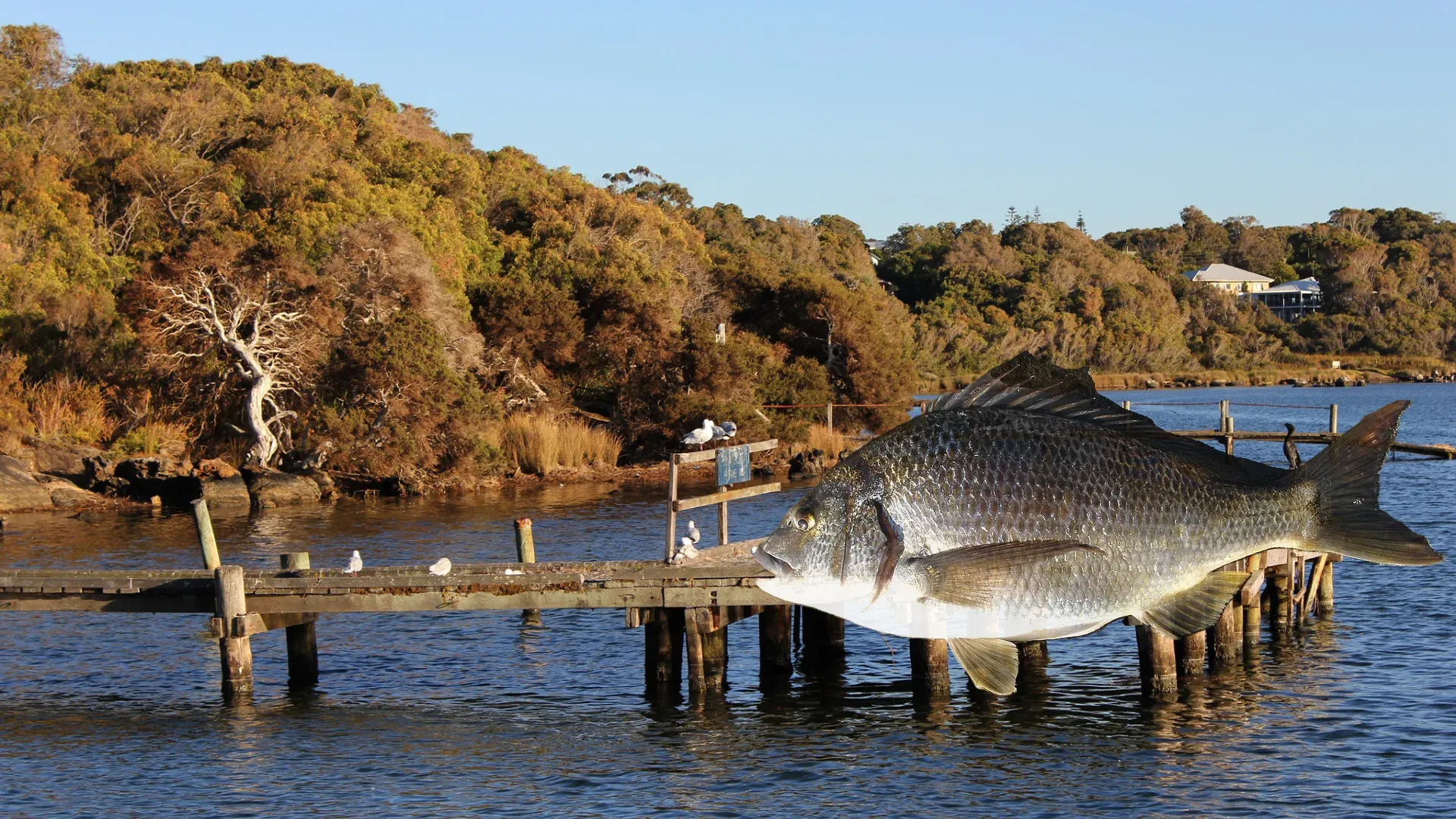
Target Species
Black Bream
Blackwood River is one of the best spots for black bream fishing in WA, with deep forested snag systems and a strong population of fish over 40 centimetres. Work the lower Hardy Inlet flats around Augusta or the timber-lined pools upstream toward Alexandra Bridge, fish the first half of a making tide at dawn or dusk, and expect some of the hardest-pulling estuary bream in Western Australia.
Flowing past towering karri and marri forests before emptying into the Southern Ocean at Augusta, the Blackwood River system is affectionately known among West Australian anglers simply as “The Wood”. Draining one of the largest catchments in the South West, this waterway has a fabled reputation for producing heavy, barrel-chested black bream (Acanthopagrus butcheri) that know every inch of their submerged timber habitat. For the sportfisherman, the river represents the quintessential bream arena. It combines glassy tannin-stained reaches, steep drop-offs, expansive shallow flats, and an abundance of sunken timber that punishes loose drags and lazy knots.
What makes the Blackwood unique among South West systems is its sheer scale and hydraulic complexity. Tidal influence snakes around 40 kilometres upstream from the mouth, past Molloy Island and on toward Alexandra Bridge. This dynamic environment gives bream plenty of room to roam across varying salinities throughout the year. The river has bounced back from historical declines, helped by a Murdoch University and fisheries restocking program that released hundreds of thousands of hatchery-reared juveniles, their otoliths stained so they could be told apart from wild fish, in the early 2000s. Restocked fish later made up a large share of the estuary catch, and today those year classes and their wild-spawned neighbours inhabit every major pool, rock bar and timber laydown.
Whether you are casting light hardbodies along the limestone edges near the mouth, pitching weedless plastics into heavy timber around Warner Glen, or drifting fresh baits along deep drop-offs, the Blackwood provides an uncompromising test of technical skill. In this guide, you will learn the exact tackle configurations needed to survive being “wooded”, the seasonal migratory movements of the fish, key access points for land-based and boat anglers, and the precise presentations that turn shy follows into bone-jarring strikes.
Getting There
Black Bream
Acanthopagrus butcheri
Always check current NSW DPI regulations before fishing. Bag and size limits may change.
Understanding Blackwood River: Location Intelligence
The Blackwood River features a saltwater wedge that can push around 40 kilometres inland, providing dense fallen jarrah timber, limestone edges, and deep river pools where Black Bream feed on abundant shrimp, crabs, and bivalves.
To fish the Blackwood River effectively, an angler must understand how water density, seasonal rainfall, and riverbed topography intersect. Unlike short coastal estuaries that flush out rapidly, the Blackwood is an expansive, ancient river drainage. The lower reaches around Augusta open into the broad Hardy Inlet, where shallow sand flats, seagrass beds, and tidal channels dominate the landscape. In this lower estuary, marine water exchanges vigorously through The Cut, introducing salty conditions that support juvenile marine fish, prawns, and shore crabs. Here, bream forage over shallow sandbars and around man-made structures such as the Augusta jetty, commercial moorings, and the canal walls around Pelican Point.
As you navigate upriver past the confluence of the Scott River and around Molloy Island, the system transitions into a defined river channel bordered by paperbark wetlands and heavy forest. This marks the beginning of the true snag country. The river bottom transforms from clean marine sand into soft silt and organic detritus, studded with massive fallen timber. For thousands of years, winter storms have undercut the riverbanks, toppling giant jarrah, marri, and karri trees directly into the deep pools. These sunken giants create complex, multi-layered root webs and trunk labyrinths that local fishers call “The Wood”. Black bream use these structural bastions as ambush points to intercept baitfish, gobies, and river prawns swept along by the tidal flow, as well as sanctuary from avian predators and hunting pods of dolphins.
The water column itself possesses distinct hydraulic layering, especially between late spring and late autumn. A heavier, saline wedge creeps along the river bottom beneath a lighter surface layer of tannin-stained freshwater. Because black bream possess broad physiological osmoregulation, they hold right in this lower saline layer where food gathers and water temperatures remain stable. Depths vary considerably: the flats in Hardy Inlet sit between 0.5 and 1.8 metres, while upriver sections around Alexandra Bridge, Chapman Pool, and Warner Glen feature deep holding holes plunging to four, six, or even eight metres. During dry spells, high water clarity forces the bream deep into the shaded undercuts of these holes or tight against structural roots. When sudden rainfall washes natural tannins and organic material into the upper catchment, the water takes on a rich tea colour, lowering visibility and encouraging fish to venture out into shallower margins to feed aggressively across the mud shelves.
Location Essentials
Blackwood River
-34.3160, 115.1610
Navigating this intricate waterway demands constant vigilance from small boat and kayak operators. Upriver of Molloy Island, deadheads and half-submerged logs sit just below the surface, ready to catch an outboard skeg or propel unwary craft onto mud banks. The reward for navigating these obstacles is access to stretches of pristine water that see far less angling pressure than suburban estuaries. For land-based anglers, targeted shore access is concentrated around key points such as the Ellis Street boardwalk, the West Bay foreshore, the riverbanks flanking Alexandra Bridge, and the natural campsites around Warner Glen. Each of these zones represents a distinct micro-habitat requiring tailor-made approaches to presentation, leader strength, and hook placement. If you’re making a South West road trip of it, the Margaret River mullet guide is under an hour north, and every bream guide we’ve written sits on our black bream species hub.
When Is the Best Time to Fish for Black Bream at Blackwood River?
The best time to target black bream in the Blackwood River is during the early morning dawn and late afternoon dusk windows, especially when they coincide with the first two hours of a making tide. Late spring through summer offers prime conditions as fish push upstream past Alexandra Bridge, while night sessions regularly fool the biggest solitary trophy fish feeding along shallow mud flats.
Tides dictate almost every movement bream make in the lower and middle reaches of the Blackwood system. Tidal movement pushes clean marine water around 40 kilometres upstream from the river mouth at Augusta. The sweet spot for active feeding occurs during the run-in tide. As the salty ocean push enters the lower estuary, it displaces cooler, tannin-stained freshwater, lifting baitfish, school prawns, and river crabs out of bottom structure. Bream follow this tidal surge closely, moving out of deep holes to browse on submerged timber, rock bars, and shallow flats around Molloy Island and the Hardy Inlet channels.
Low water slack tide produces notoriously tough fishing. During the slack, bream drop back into the deepest pockets of the river or bury themselves far inside impenetrable brush piles and fallen trees. You can still pick up fish during the turn of the tide by bouncing small presentations vertically down deep timber faces, but your strike rate climbs drastically the moment water starts moving again. The first two hours of the incoming tide and the peak hour of the run-out tide consistently yield the most aggressive bites.
Light levels play a decisive role in the Blackwood. Because the water runs remarkably clear outside of heavy winter downpours, mature bream possess razor-sharp eyesight and shy away from unnatural movements or heavy leaders under harsh midday sun. First light brings an unmatched bite window. Surface feeding is common at dawn, with fish mooching quietly along the edges of reed beds and fallen paperbarks chasing glass shrimp. Late afternoon offers a second flurry, particularly along western-facing banks where shadow lines fall across the water early.
Night sessions should never be overlooked by serious bream hunters. Once darkness settles over the river, the largest, wisest fish let their guard down. Bream that refuse to look at a lure during daylight will push right up onto knee-deep sand flats and mud banks along the Augusta foreshore near Turner Caravan Park to forage for burrowing worms and small crabs. Silent running with an electric motor or fishing carefully from shore without shining headlamps onto the water is essential during after-dark operations.
Seasonal rainfall determines where the fish hold along the 40-kilometre estuarine reach. From late autumn through mid-winter, heavy south-west cold fronts flood the catchment with millions of litres of freshwater run-off. This massive influx drops the salinity levels upriver, flushing schools of bream downstream toward the lower basin, the Deadwater and the Hardy Inlet channels. As the catchment dries out through late spring and summer, the salt wedge pushes back inland and the larger fish follow it upstream toward Alexandra Bridge and the pools around Warner Glen.
Tide Times
Optimal Tide
First two hours of the run-in tide and the initial push of the run-out tide
Tide movement is critical for fish activity. Most species feed actively during tide changes, especially the run-in (incoming) tide.
Detailed hourly tide charts
Official tide predictions
7-day tide calendar
Tide Guide
Best for most species. Fish move in to feed as water rises.
Good for ambush predators. Baitfish get swept out.
Slower bite. Fish less active during slack water.
New/full moon. Bigger tidal range, more fish movement.
Moon Phase & Solunar
Moon phases influence fish feeding behavior. New and full moons create spring tides with stronger currents and increased fish activity.
Best Phases
- New Moon: Peak feeding activity, spring tides, excellent fishing
- Full Moon: Strong tides, night feeding, great for nocturnal species
- 3 Days Either Side: Extended peak period for maximum results
Major/Minor Periods
- Major Periods: Moon overhead/underfoot (2-3 hours)
- Minor Periods: Moon rise/set (1-2 hours)
- Best Times: Major period + dawn/dusk = explosive action
Weather Conditions
Check current conditions before heading out. Wind, swell, and barometric pressure significantly affect fish behavior.
Official forecasts, warnings & radar
Hourly wind speed & direction
Swell height, period & direction
Capitalise on Dark Tannin Lines
Following moderate rainfall events in spring, search out the distinct line where brown, tannin-stained freshwater meets the pushing blue ocean water. Black bream sit on the dark side of this visual divide, ambushing crabs and small bait swept across the boundary. Pitch your presentation directly through the cleaner surface layer into the stained undercurrent for immediate hook-ups.
Black Bream Seasonal Calendar
What Tackle Do You Need for Black Bream at Blackwood River?
To fish effectively for black bream at Blackwood River, choose a 6-foot-8-inch to 7-foot light spin rod rated 1 to 3 kilograms paired with a smooth 2000 or 2500 sized reel. Spool up with high-visibility 6 to 10-pound PE braid connected to a rod-length leader of 4 to 8-pound fluorocarbon to negotiate dense snags without spooking wary fish.
Tackling up for the Blackwood River requires balancing extreme finesse with emergency stopping power. West Australian anglers call the river “The Wood” because the bream here make instantaneous, relentless dives back into timber snags the microsecond they feel steel. Choosing gear that is too heavy will cost you bites in the crystal-clear pools, yet gear that is too weak will see you broken off continuously in the branches. For more tackle basics, see our tackle essentials guide, and compare it with the lighter, cleaner-water approach in our Clyde River black bream guide.
Your rod needs to feature a fast, responsive tip that can flick tiny 1/20-ounce jigheads and sub-five-centimetre lures deep into narrow pockets under overhanging paperbarks. However, it must retain plenty of backbone in the lower half of the blank. A rod between 6 feet 8 inches and 7 feet in length gives you the required casting accuracy from a boat or kayak while supplying enough levering power to pivot a big fish away from an underwater log.
A 2000 to 2500 reel loaded with premium 6 to 8-pound multi-strand braid provides the direct feel needed to detect tiny bream taps. High-visibility braid in chartreuse, orange, or white is an enormous advantage here: you will often see your line jump or twitch sideways before you register the bite through the blank. Pair this with a silky drag system, but learn to apply firm thumb pressure to the spool flange when a solid 40-centimetre specimen attempts to bury you into structure.
Leader material must be 100 percent fluorocarbon. In the middle reaches around Molloy Island and Alexandra Bridge, an unweighted bait or micro-lure swimming on 4-pound leader will generate three times as many strikes as one on 8-pound. When you find yourself targeting bream tucked right inside gnarly fallen gum trees, upgrade to an abrasive-resistant 6 or 8-pound fluorocarbon leader. For detailed knot choices to join thin braid to fine fluorocarbon without losing breaking strain, review our guide on fishing knots.
Terminal gear must be matched precisely to the river flow and timber density. Light jigheads ranging from 1/20-ounce to 1/12-ounce armed with size 1 or size 2 heavy-wire hooks are standard tools. Bream have hard, crushing teeth that will easily bend lightweight freshwater hooks on heavy pressure, so stick with forged wire hooks when wrestling fish out of snag country.
Complete Tackle Specifications for Blackwood River Black Bream
| Component | Specification |
|---|---|
| Rod | 6ft 8in to 7ft fast action graphite spin rod, rated 1-3kg or 2-4kg |
| Reel | 2000 to 2500 size spinning reel with carbon matrix drag system |
| Main Line | 6lb to 10lb PE 0.6 to 0.8 multi-carrier braid |
| Leader | 4lb to 8lb fluorocarbon, 2 to 3 metres joined via FG or Double Uni knot |
| Jigheads | 1/20oz to 1/12oz with size 1 or 2 heavy-wire hooks, hidden-weight system |
| Hooks | Size 4 to size 1/0 baitkeeper, fine-wire circle, or wide-gape baitholder |
| Sinker | Size 0 to size 2 ball sinker, running directly onto hook or swivel |
| Swivels | Size 12 to 14 micro crane or rolling swivels for running rigs |
How Do You Rig for Black Bream?
The most productive rig for black bream in snag-heavy sections of the Blackwood River is an unweighted or lightly-weighted running sinker rig, or a weedless hidden-weight jighead. Threading an ultra-light ball sinker directly above a fluorocarbon-tied hook allows natural bait movement through timber without catching branches.
Setting up terminal rigs for Blackwood River bream requires minimal metal and maximum stealth. Heavy swivels, wire clips, and large sinkers will cause wary southern bream to reject a bait instantly. Because the river floor is strewn with centuries of submerged deadfalls, standard rigs snag on every retrieve. Rigging weedless or using free-sliding unweighted setups saves your terminal tackle and keeps your presentation drifting naturally inside the primary strike zone.
When bait fishing along current lines or mud drop-offs, the unweighted rig rules supreme. You simply tie a size 4 or size 2 baitkeeper hook directly to the end of a two-metre length of 4 to 6-pound fluorocarbon leader using a simple locked half-blood or uni knot. The weight of a fresh river prawn or juicy mussel provides enough mass to cast into the shadows. The bait sinks agonizingly slowly, exactly like a natural item tumbling out of overhanging foliage, coaxing stubborn fish out of deep timber.
If tidal flow forces you to add weight to reach the bottom, convert to a light running ball sinker rig. Thread a tiny size 00 or size 0 ball sinker directly onto your fluorocarbon leader, followed by a soft rubber buffer bead and a micro swivel. From the swivel, run a 40 to 60-centimetre bite tippet down to your hook. This configuration allows a foraging bream to pick up the bait and swim off without feeling the resistance of the lead weight resting on the sand.
For lure anglers, the TT Hidden Weight System (HWS) or a Texas-style weedless hook setup is crucial for survival around snags. Positioning the lead weight along the hook shank inside a soft plastic body prevents the head from jamming into split timber forks. You can cast this configuration right into the darkest heart of fallen trees, letting it flutter downward with zero hang-ups. For extra breakdowns of estuarine setups, read our complete overview of fishing rigs explained.
Building the Weedless Finesse Running Rig
- 1
Connect Braid to Leader
Join 6lb main braid to a 2.5-metre length of 6lb fluorocarbon leader using a neat 16-turn FG knot or a compact double uni knot, trimming tag ends flush.
- 2
Slide on Ball Sinker
Thread a tiny size 00 ball sinker onto the fluorocarbon leader so it slides completely free along the line without snagging.
- 3
Add Protective Buffer Bead
Slide a 3mm soft rubber bead onto the leader immediately below the sinker to protect the connection knot from lead impact.
- 4
Attach Micro Barrel Swivel
Tie a size 14 black rolling swivel to the end of your main leader using a 5-turn uni knot, ensuring the knot is thoroughly moistened before cinching.
- 5
Tie the Trace Section
Tie a 50cm length of supple 4lb or 6lb fluorocarbon trace to the open eye of the micro swivel with a matched uni knot.
- 6
Attach the Hook
Fasten a size 2 wide gape or baitkeeper hook to the end of your trace using a non-slip loop knot to give the bait total swimming freedom.
- 7
Check Drag and Weight Balance
Pull test the complete rig under pressure, check the hook point for razor sharpness, and confirm the sinker slides without catching.
What Bait Works Best for Black Bream?
The most effective baits for black bream in the Blackwood River are fresh river prawns, live ghost shrimp (yabbies), and locally gathered mussels. Presenting live or freshly procured bait with minimal sinker weight mimics the natural forage of the estuary and consistently out-fishes frozen commercial packets.
Blackwood River bream can be extraordinarily selective feeders. Because the waterway carries heavy seasonal flushes and extensive organic matter, the riverbed produces an abundant supply of natural food. Fish routinely ignore stale, freezer-burned offerings, making fresh bait procurement an essential part of your trip. Learn more about matching species to bait types in our dedicated fishing bait guide.
Live river prawns are the premier bait from spring through autumn. In late spring and summer, prawns move along the riverbanks, particularly around Molloy Island and Hardy Inlet. Gathering live prawns at night with a fine-mesh scoop net and headlamp around the shallows provides bait that bream simply cannot pass up. Hook a live prawn through the tail carapace with a fine-wire size 2 hook, taking care not to puncture the dark stomach spot near the head.
Ghost shrimp, commonly called yabbies, rank a very close second. You can pump these delicate crustaceans on low tide across exposed sandbars in the Hardy Inlet basin near the river mouth. Bream track schools of yabbies across muddy drop-offs with reckless abandon. Because their shell is soft, thread them carefully from the tail up the hook shank, using light bait elastic if they repeatedly break apart on the cast.
Fresh mussels gathered from rocks near the Blackwood river mouth (check the DPIRD rules for mussel limits before you collect) provide deadly attraction when bream are feeding on hard shell. Crack the shell slightly with a knife blade, cut out a tender fleshy section, and thread it multiple times onto a size 4 baitkeeper hook. The scent trail of fresh mussel juice drifting down an eddy will draw fish straight out of impenetrable snags.
Cut baits such as fresh mullet strips, river herring fillets, or small bluebait work reliably in deeper water holes, particularly during winter run-off when bream hunt by scent through discoloured water. Cut strips into tapered ribbon shapes roughly five centimetres long, piercing the bait once through the widest end so it flutters naturally in current rather than spinning wildly.
Bait Performance Analysis for Blackwood River Black Bream
| Fresh River Prawns | Live Ghost Shrimp | Black Estuary Mussels | Fresh Mullet Strips | |
|---|---|---|---|---|
| Effectiveness Rating | 9.5 / 10 | 9.0 / 10 | 8.5 / 10 | 7.5 / 10 |
| Durability on Hook | Moderate | Low to Moderate | Moderate | High |
| Scent Dispersion | High | Extremely High | Very High | High |
| Availability | Seasonal (spring to autumn) | Year-round via pump on mudflats | Year-round on pilings and rocks | Year-round in local bait shops |
| Best Use Conditions | Dead-drifting around fallen timber and overhanging paperbark roots | Working shallow sandbars and channel drop-offs on an incoming tide | Vertical fishing tight against bridge pylons and submerged rock bars | Deep river pools during heavy winter runoff and dirty water flushes |
The Tail-Hooking Secret
When using fresh river prawns around timber, hook the prawn lightly through the second-last tail segment from the underside out through the top. This keeps the prawn swimming naturally forward with each twitch of the rod tip, generating explosive reaction bites from resident bream hanging suspended mid-water.
What Lures Work Best for Black Bream at Blackwood River?
The best lures for black bream at Blackwood River are 2 to 3-inch soft plastics on weedless or hidden-weight jigheads for the timber, small floating or suspending hardbodies of 35 to 50 mm cast to snags and rock bars, and surface walkers or poppers over the shallow flats in summer. In the cold months, small blades and vibes worked slowly through the deep holes take fish that ignore everything else.
Bait gets most of the attention on the Blackwood, but lures cover more water and find the active fish faster. The river suits four styles of lure, and each one has its own season and its own part of the system. Carry a small box of each and let the water temperature, clarity and depth decide which one goes on.
Soft Plastics in the Timber
Soft plastics are the most versatile lure on the river. A 2 to 3-inch grub, paddletail or shrimp profile on a 1/20 to 1/12-ounce hidden-weight or weedless jighead can be pitched deep into a snag without hanging up every cast. Land it just past the timber, let it sink on slack braid down the face of the snag, then give it two short lifts and a long pause. Most bites come as the plastic falls or while it sits still, so watch the braid rather than waiting to feel the take.
Colour matters more here than on clear coastal estuaries. In tannin-stained water upstream, darker plastics such as motor oil, brown and black throw a clear silhouette. Near the mouth in clean summer water, natural tones like pumpkinseed, clear with gold flake, and translucent prawn colours look more convincing. After a flood pushes dirty water downstream, a dash of chartreuse helps fish find the lure, and a smear of scent gel keeps them holding on longer.
Hardbodies on Snags and Rock Bars
Small floating or suspending crankbaits of 35 to 50 mm that dive 1 to 3 metres are the classic Blackwood lure for big fish. Cast tight to a snag or rock bar, wind the lure down to depth, and deliberately bump it into the timber. The bib deflects the lure off the wood, and that sudden change of direction triggers bream that have ignored a straight retrieve. After each bump, pause: a floating lure rises out of the snag on its own, which saves lures and often draws the strike.
Around the rock bars and drop-offs in the middle reaches, a small suspending minnow twitched two or three times and then left to hang for several seconds works on fish that are following but not committing. If bream are bending or straightening the hooks in heavy timber, swap to slightly heavier-gauge trebles of the same size so the lure still swims properly.
Surface Lures on the Flats
From late spring to early autumn, black bream feed on the surface across the shallow sand and weed flats of Hardy Inlet and along the river margins, especially at dawn, dusk and on overcast days. A 40 to 60 mm walk-the-dog stickbait or small cupped popper worked slowly with plenty of pauses draws explosive strikes. Make long casts on 4 to 6-pound leader, and resist the urge to strike at the first swirl: wait until you feel the weight of the fish before lifting the rod, or the lure gets pulled straight out of its mouth.
Blades and Vibes for Winter
When the river runs cold and fresh in winter, bream school up in the deeper holes and drop down to the salt wedge on the bottom. Small metal blades and soft vibes of 1/8 to 1/4 ounce let you reach them. Hop the lure 20 to 30 centimetres off the bottom with short lifts of the rod tip, then let it flutter back down on a tight line. Blades lose plenty of trebles in heavy timber, so fish them over clean drop-offs and channel edges rather than straight into snag piles.
Lure Selection for Blackwood River Black Bream
| Soft Plastics | Hardbodies | Surface Lures | Blades and Vibes | |
|---|---|---|---|---|
| Best Season | Year-round | Spring to autumn | Late spring to early autumn | Winter |
| Where to Use | Inside timber, snag faces, mud banks | Snags, rock bars, steep edges | Shallow flats and margins | Deep holes and channel edges |
| Size | 2 to 3 inch on 1/20 to 1/12oz | 35 to 50mm, 1 to 3m divers | 40 to 60mm stickbaits and poppers | 1/8 to 1/4oz |
| Retrieve | Sink, two short lifts, long pause | Bump the timber, then pause | Slow walk with long pauses | Short hops off the bottom |
| Best Colours | Dark in tannin water, natural in clear water | Brown, black, natural prawn | Clear, bone, natural | Gold, black, dark metallics |
Count Your Lure Down at Every Snag
On your first cast at a new snag, count how many seconds your plastic takes to hit the bottom. On the next casts, stop the count two seconds early and start your retrieve. The lure stays in the strike zone just above the wood, you lose far fewer jigheads, and you find out exactly how deep the fish are holding.
How Do You Catch Black Bream at Blackwood River?
To catch Black Bream at Blackwood River, cast tight to fallen timber and deep rock bars using ultra-light gear, allow your offering to drift naturally with the current, and strike immediately before the fish can retreat into heavy snags.
Locating fish in this system requires a careful blend of stealth, precision casting, and keen water reading. The Blackwood holds a legendary reputation for making careless anglers pay a heavy price. Known affectionately as The Wood, this river is loaded with submerged jarrah and marri timber that serves as prime real estate for jumbo bream. If your lure or bait lands two metres away from the structure, you will often find yourself ignored. The resident fish hug the darkest parts of the wood, waiting for tidal flow to wash food into their strike window. Mastering the river means learning how to put your presentation directly into the root balls and fallen branch piles without snagging on every single cast. For deeper foundational advice on presenting lures and reading estuary flows, review our detailed guide on fishing techniques.
Casting Strategy and Bait Placement
Accuracy trumps distance every day of the week on the Blackwood. When drifting past fallen timber lines near Warner Glen or working the snags around Alexandra Bridge, position your boat or kayak parallel to the bank. Cast upstream of the structure at an angle of roughly forty-five degrees. This allows the tidal flow to sweep your presentation naturally into the face of the snag, exactly where an ambush predator sits waiting.
If you are using soft plastics like a cut-down paddletail or a scented shrimp imitation, lob the lure gently rather than firing it with excessive rod speed. High-arcing casts create line belly in the wind, pulling your lure away from the timber before it sinks into the strike zone. Keep your rod tip low and thumb the spool right as the presentation touches down to prevent slack. Allow the lure or unweighted bait to sink on a semi-slack line. Watch the belly of your high-visibility braid intently. Many of the hardest strikes occur on the initial drop within the first two metres of water column.
When working steep mud banks or deep river pools, cast right up to the wet waterline where terrestrial insects and small crabs tumble into the drink. Hop the bait down the slope in small increments of ten to twenty centimetres, letting it rest motionless on the bottom for up to ten seconds between twitches. Big, wary bream will often tail up over a stationary plastic, inspecting it closely before inhaling it.
Bite Detection and Hookset
Detecting a bream bite in heavy timber demands continuous focus. Black Bream rarely smash a bait with careless abandon unless they are competing in a dense school. More often, the take feels like a dull weight, a subtle tick on the line, or a sudden sideways migration of your braid.
Because bream have hard, crushing jaws designed to crack shellfish, timing your strike is critical:
- When fishing scented soft plastics, wait until you feel a firm double-tap or steady pull, then set the hook with a sharp, upward flick of the wrist.
- When fishing small trebles on floating hardbody minnows, avoid striking violently. Instead, sweep the rod smoothly to pull the small hooks home without tearing them out of the soft mouth membrane.
- If you run live river prawns or tube worms on a running sinker rig, leave a small amount of slack or fish with an open bail arm for a split second. Let the fish turn with the bait before locking up.
- Never give the fish free rein to swim downstream. An extra half-second of hesitation gives a cunning bream enough time to wrap your fluorocarbon leader around a submerged branch.
Fighting and Landing Strategies
Hooking a quality bream in the Blackwood is only half the battle. The immediate seconds following the hookset will decide whether you land a trophy or leave empty-handed. Local anglers call being broken off in the timber being wooded, and it happens with brutal speed.
The moment you set the hook, keep your rod tip high and apply firm, direct pressure. While ultra-light sportfishing generally favours a light drag, fishing deep inside Blackwood timber requires a firmly clamped drag setting. You need to turn the fish’s head on the initial surge. Do not let the bream make an uninterrupted run back into the root ball. Pump the rod firmly, gaining line on the downward stroke, and guide the fish out into open water.
Once the bream is away from the immediate structure, back your drag off a few clicks to avoid pulling the hook during its characteristic head-shaking runs near the surface. Always use a knotless, rubber-mesh landing net. Black Bream possess sharp dorsal spines and gill covers that easily tangle in coarse mesh, which damages their protective slime coat and delays an efficient release.
What Are the Rules for Fishing at Blackwood River?
Fishing rules at Blackwood River stipulate a minimum legal size limit of 250 mm for Black Bream, with a daily bag limit of 6 fish per angler within the broader mixed estuarine finfish limit of 16.
The Blackwood fishery is managed by the Department of Primary Industries and Regional Development (DPIRD). After historic declines, the restocking program rebuilt this population with juvenile bream whose otoliths were dye-marked before release, and keeping that hard-won recovery depends on every angler respecting the limits.
Key Western Australian regulations for the Blackwood River include:
- Minimum Size Limit: 250 mm total length, measured from the tip of the snout to the tip of the tail.
- Daily Bag Limit: 6 black bream per person per day. The Swan and Canning rule allowing only 2 fish over 400 mm does not apply on the Blackwood.
- Combined Finfish Limit: Your bream count toward the statewide mixed nearshore/estuarine finfish bag limit of 16 fish per day.
- Licensing Requirements: No licence is needed to line fish for bream from the shore or from a kayak or other non-powered craft, but you must hold a Recreational Fishing from Boat Licence (RFBL) to fish from a powered boat.
These limits were verified on 17 November 2026 against the official DPIRD black bream rules. Rules are reviewed between seasons, so confirm them on the DPIRD Recreational Fishing Rules page before you drive down, and see our regulations guide for how WA’s mixed bag limits work.
Critical Safety Considerations
The Blackwood River presents unique navigational and environmental hazards that demand constant awareness:
- Heavy Drifting Weed: Dense weed banks often flush through The Cut near the river mouth. Mats can reach close to a metre in thickness, rapidly clogging outboard cooling intakes and fouling jet drives. Monitor your engine telltale continuously.
- Submerged Timber Hazards: Deadheads, snags, and shifting sandbars litter the upper reaches above Alexandra Bridge and Warner Glen. Travel at idle speeds in unfamiliar channels to avoid hull damage and thrown passengers.
- Tidal Current and Swell: The river mouth opens into Flinders Bay where powerful Southern Ocean swells meet fast-running tidal currents. Crossing the bar at the mouth should only be attempted by experienced skippers in seaworthy vessels under calm conditions.
- Emergency Contacts: In an emergency, call 000, or raise Augusta-Margaret River Volunteer Marine Rescue on VHF Channel 16. Carry an Australian-approved personal flotation device (PFD) at all times, especially when operating kayaks in fast water.
To preserve the Blackwood River fishery for future generations, apply thoughtful conservation practices whenever you hit the water:
- Handle Big Breeders Gently: Black bream grow slowly, and a 40-centimetre fish is often well over a decade old. Release these large breeding females to sustain natural recruitment.
- Use Fish-Friendly Gear: Single barbless hooks or crushed-barb trebles significantly reduce puncture injuries, allowing for quick, harmless unhooking in the landing net.
- Revive Before Release: Support exhausted fish upright in the current until their fins stabilize and they kick away strongly under their own power.
- Pack Out Your Rubbish: Dispose of torn soft plastics, cut leader ends, and bait bags in onshore bins. Discarded fluorocarbon lasts for decades in freshwater timber and creates lethal hazards for local birdlife. Review broader outdoor practices on our fishing safety page.
Your Questions About Black Bream Fishing at Blackwood River
What is the best time to fish at Blackwood River?
The best time to fish at Blackwood River is during early morning and late afternoon, particularly across the spring and autumn months on a rising tide.
When planning when to fish, target the low-light hours around dawn and dusk to capitalize on peak feeding activity. The Blackwood runs exceptionally clear outside of winter flood periods, making mid-day fish cautious. Early morning brings calmer conditions and lower sunlight, encouraging fish to leave deep cover. Planning your trip around the incoming tide ensures higher oxygen levels and moves baitfish into feeding channels.
Is Blackwood River suitable for beginners?
Yes, Blackwood River is very suitable for beginners, featuring plenty of safe shore access, stable jetties, and straightforward bait fishing spots.
Finding beginner-friendly locations is easy along the lower estuary. The Augusta town foreshore around Ellis Street and Turner Caravan Park provides flat, secure ground where novice anglers can drop simple running sinker rigs. These easy spots produce plenty of school bream, whiting and herring, offering immediate action without requiring advanced lure casting skills or watercraft handling.
Do I need a boat to fish at Blackwood River?
No, you do not need a boat to fish at Blackwood River, as extensive shore fishing spots exist from Augusta up to Warner Glen.
While a boat provides access to remote snags, land-based fishing is exceptionally productive along this system. You can fish the banks around the Alexandra Bridge campground, explore the deep water at Chapman Pool near Warner Glen, or walk the Hardy Inlet flats near the river mouth to sight-cast into sand pockets and drop-offs.
Where are the best specific spots at Blackwood River?
The best specific spots at Blackwood River are Alexandra Bridge, Warner Glen and Chapman Pool, Molloy Island, the Deadwater, and the Hardy Inlet foreshore at Augusta.
These proven fishing marks cover diverse aquatic habitats. Anglers hunting heavy river timber should head upstream to Alexandra Bridge and Warner Glen, where fallen trees line the banks. For saltier estuary fishing, stay down around the Deadwater and Hardy Inlet, where sand flats and weed banks hold feeding schools.
What size Black Bream can I expect?
Most black bream you’ll catch are 26 to 34 centimetres, and fish over 40 centimetres turn up regularly.
While the average catch size sits in the high-twenties bracket, the Blackwood is renowned throughout Western Australia as a premier trophy fish system. A fish over 45 centimetres is possible around heavy timber upriver. These old, dark-coloured fish require patience, stealthy approaches, and resolute gear to pull out from underwater obstacles.
Is there parking available at Blackwood River?
Yes, there is ample sealed and unsealed parking available at public boat ramps, foreshore reserves, and national park camp sites along the river.
In Augusta, the Ellis Street boat ramp has sealed bays for cars and boat trailers. Further upriver, unsealed gravel parking spaces are situated directly adjacent to the water at Alexandra Bridge and Warner Glen. If you are exploring national park tracks along the upper banks, a high-clearance vehicle is helpful after heavy winter downpours.
Can I fish at night at Blackwood River?
Yes, you can fish at night at Blackwood River, and after-dark sessions often produce the largest and boldest bream of the season.
Night fishing pays off because trophy bream drop their natural caution after dark. Big fish leave deep snag piles to roam the shallow flats along the Augusta foreshore and the downstream sandbars. Use oily baits like fresh mullet strip or slow-rolled, dark-coloured surface lures on calm nights to draw decisive surface strikes.
Where can I buy bait near Blackwood River?
You can buy bait and basic tackle in Augusta from the local tackle and outdoor stores and the service stations.
Augusta’s tackle and outdoor stores and service stations stock frozen prawns, whitebait and blue sardines. For the best results, pump your own live ghost shrimp on the low-tide flats near the river mouth.
What are the current bag and size limits?
The current legal limits for black bream at Blackwood River are a minimum length of 25 cm and a daily bag limit of 6 fish.
Return undersized bream to the water immediately with minimal handling. Your bream count toward the statewide mixed nearshore/estuarine finfish limit of 16 fish, and fisheries officers patrol the river through the holiday peaks. Check the DPIRD rules lookup before each trip.
Is Blackwood River family-friendly for fishing?
Yes, Blackwood River is remarkably family-friendly, offering calm waters, picnic amenities, public restrooms, and safe bank fishing platforms.
Families should stick to the sheltered Hardy Inlet foreshore in Augusta, where flat grassy banks, picnic spots and nearby toilets make a short session easy. Kids can catch small whiting, herring and school bream without negotiating steep drops or ocean swell.
What should I bring for a fishing session?
Your essential gear should include a light 2-4kg spin rod, 6-8lb fluorocarbon leader, size 2 to 1/0 baitholder hooks, polarised sunglasses, and a knotless landing net.
A solid fishing checklist for the Blackwood should also account for the changeable South West weather. Pack warm windproof layers, a broad-brimmed hat, insect repellent for riverbank sandflies, and an insulated cooler with ice to keep bait fresh. Bring along amber-tinted polarized sunglasses to cut through the tannin-stained water and help you spot submerged snags before your boat hits them.
How crowded does Blackwood River get?
The river gets moderately crowded during summer holidays and long weekends, but quiet fishing times are easily found by traveling upriver.
The lower estuary around Augusta fills up with waterskiers and holidaymakers during the January break and Easter weekend. You can find completely empty water by launching a kayak at Alexandra Bridge or Warner Glen early on weekday mornings, leaving you free to work pristine timber snags in total seclusion.
Latest Fishing Reports
Stay updated with the latest catches, conditions, and hot tips from Blackwood River. Check these sources for recent reports filtered by location and species.
Fishraider
Community fishing reports and catch logs
Fishing World
Professional fishing reports and news
Tackle World
Local tackle shop reports and tips
NSW DPI
Official recreational fishing reports
Fishingmonthly
Monthly fishing magazine and reports
Hooked Up
Video fishing reports and tips
Pro Tip: Filter Reports
When browsing reports, search for "Blackwood River" or nearby landmarks. Look for reports from the last 7-14 days for the most relevant information. Pay attention to tide times, weather conditions, and successful techniques mentioned.
Share Your Catch
Caught something at Blackwood River? Share your success with the community! Upload your catch photos and reports to help other anglers.
Fishing regulations, bag limits, and marine zone boundaries change periodically across Western Australia. Always verify the latest requirements with the Department of Primary Industries and Regional Development before your trip.
Heading north after the Blackwood? Try the Busselton Jetty salmon guide, or the Swan River mulloway guide once you’re back in Perth. Explore more fishing spots, browse our species guides, or brush up with the fishing basics guide.
Quick Info
- Location
- Blackwood River
- Region
- Augusta, WA
- Coordinates
- -34.3160, 115.1610
- Difficulty
- intermediate
- Target Species
- Black Bream
Conditions
Check local weather and tide conditions before heading out.